



Chasing Maximum RPM: Understanding Your Engine’s Limits

Most boaters don't know when they're pushing their engine too hard until something breaks. Understanding RPM limits isn't about chasing speed—it's about keeping your powerhead running reliably for the long haul.
What You Need to Know About RPM
RPM measures how fast your crankshaft is spinning—it's the engine's pulse. At idle, most outboards sit between 700 and 1,000 RPM, just enough to keep things running smooth without load. Add throttle, and that number climbs. The trick is knowing where to stop.
Why the Redline Isn't a Target
Every engine has a redline marked on the tach, usually in red. We've seen guys treat that zone like a badge of honor, constantly nudging the needle into it or past it. That's a mistake. The redline is a manufacturer's warning, not an invitation. It marks the maximum safe operating speed under normal conditions.
Push past it—even for short bursts—and you're asking for excessive wear, violent vibration, and in the worst cases, pistons slamming into valves. We've torn down engines after they've been consistently over-revved. The damage is obvious: bent rods, hammered bearings, scored cylinder walls. You'll hear a distinct knocking sound under load before the catastrophic failure happens, but by then the damage is already started.
Mass-market gasoline engines typically redline between 6,000 and 7,000 RPM. High-performance automotive applications push higher—like the Corvette Z06's flat-plane crank V8 hitting 8,600 RPM—but those are built with exotic materials and heavy lubrication systems. Marine engines operate differently. Diesels cap much lower, around 3,400-3,600 RPM continuously, due to how they atomize fuel.
What Actually Stops Your Engine From Spinning Faster
Several mechanical limits prevent infinite RPM, and they all come down to physics and engineering constraints.
Piston Speed and Stroke
The biggest limiting factor is piston speed. The faster pistons move up and down, the more stress hits them, the connecting rods, and the crankshaft. Engineers target around 4,500 to 7,770 feet per minute (fpm) in most street engines. A shorter piston stroke lets you hit higher RPM before you reach that critical piston speed limit.
For example, a short-stroke design (like an 81.5mm bore and 63.8mm stroke) enables high-RPM operation safely, while a long-stroke engine hits the piston speed wall much earlier. That's basic geometry working against you.
Valvetrain Dynamics and Valve Float
As RPM climbs, valves have to open and close incredibly fast. The valvetrain—valves, springs, camshafts, lifters, rockers—has to keep pace. At very high RPM, valve springs might not be strong enough to close the valves before the piston comes back up. This is valve float, and it's incredibly dangerous.
When a valve floats, it stays open longer than it should. If the piston reaches it before it closes, you're looking at bent valves, damaged pistons, or worse. Race engines that run reliably at 8,200 RPM use upgraded components like Jesel solid roller lifters, PSI triple valve springs, and lightweight titanium valves to avoid this. Those parts aren't cheap, and they're not necessary for your average pleasure boat.
Crankshaft Harmonics and Dampers
At specific constant high RPMs, crankshafts vibrate at their natural frequency—harmonics—which can crack the crank or destroy bearings. Marine engines held at 80-90% throttle for extended periods are especially vulnerable to this. That's why a proper harmonic balancer or damper is critical. If yours is worn or missing, you'll see premature bearing failure and odd vibration patterns that don't match typical wear. For guidance on maintaining your engine components, consider exploring our resources on inboard & outboard motor parts.
Materials, Heat, and Lubrication
Higher RPM means more friction, more heat, more stress. High-performance engines use forged pistons and titanium connecting rods to handle the load. Proper lubrication is non-negotiable—oil has to reach every part quickly to prevent metal-on-metal contact. Running the wrong viscosity for your operating temperature will cost you a bottom end.
Heat management is even more critical in marine applications. A clean impeller and clear water intakes are essential for stable operating temperatures, which directly impact RPM capability. We've seen engines lose 500 RPM capability just from a partially clogged raw water intake restricting flow. Regular inspection and replacement of cooling system parts like the water pump impeller help prevent this issue. For a detailed guide on maintaining your cooling system, check out our cooling system parts collection.
Fuel-Air Mixing and Combustion Efficiency
At extreme speeds, the time available for fuel and air to mix and combust in the cylinder drops drastically. Historical F1 engines revving to 20,000 RPM had less than a third of a second per combustion cycle. While you're not hitting those numbers on a boat, combustion efficiency still drops off at very high RPM. The engine might be spinning fast, but it's not making efficient power at those top revs.
Why Marine Engines Are Different
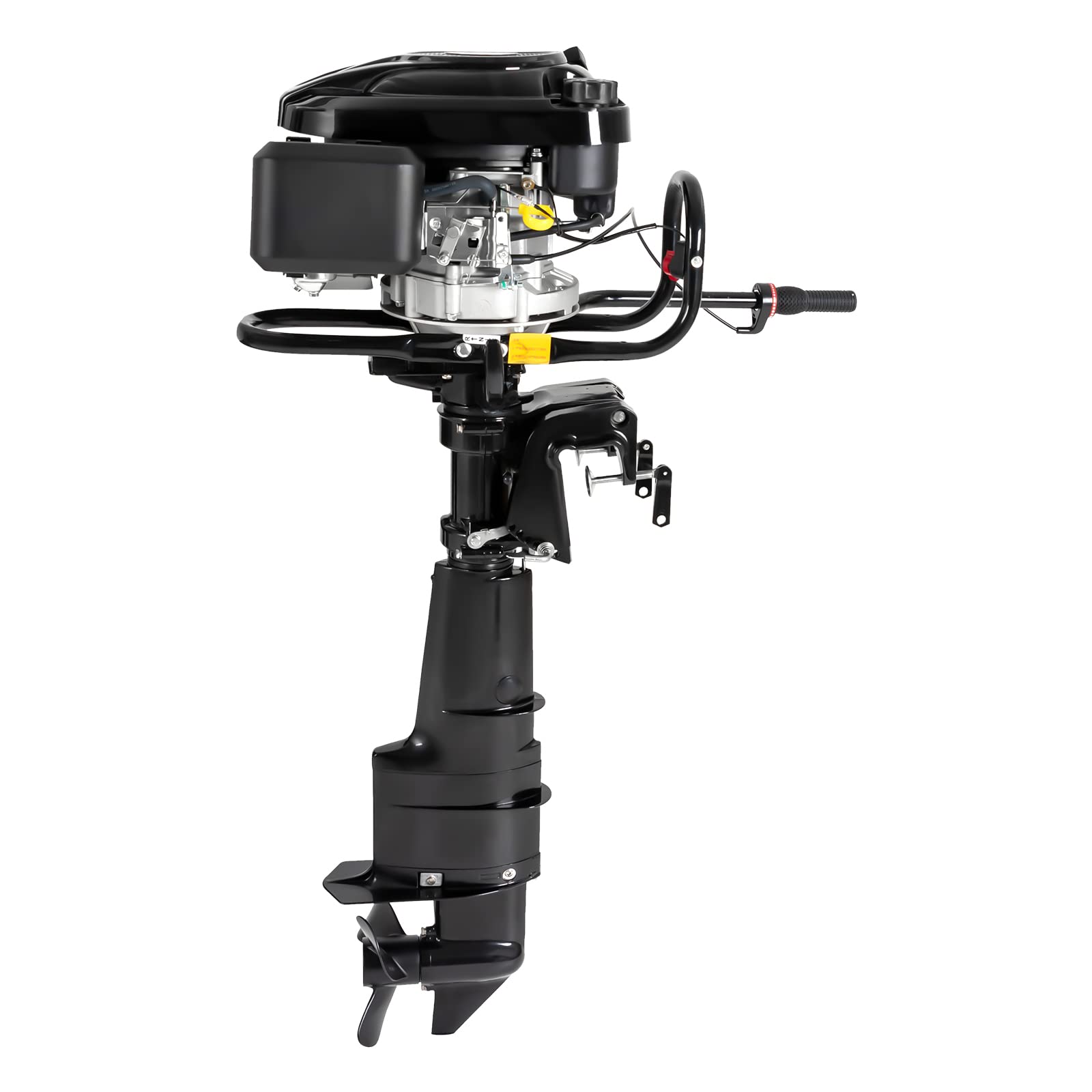
Unlike a car that cruises at moderate RPM, a boat engine—especially once on plane—frequently runs at 80-90% of maximum output for extended periods. That constant load demands robust cooling. Most outboards and inboards use raw water cooling, which is far less controlled than a car's closed-loop radiator system. Overheating is more common, and it directly limits how long you can sustain high RPM.
Raw water cooling brings another risk: at high RPM in choppy water, the intake can suck air instead of water—aeration. This causes rapid overheating even with a clean impeller. The water pump spins faster, but it's pumping foam instead of liquid. You'll see the tell-tale sign: the pee stream goes from a solid stream to a sputtering spray, then stops entirely. For more on water pump maintenance and impeller replacement to avoid these issues, see our guides on how to replace a Mercury outboard water pump impeller and signs your outboard impeller needs replacement.
Propeller slip is another major factor that doesn't exist with car tires. A prop moving through water always slips—it doesn't "grip" the way a tire does on asphalt. The amount of slip changes with load, hull design, and water conditions. This means your engine can hit wildly different RPMs under different conditions, even at the same throttle setting. A heavy deep-V hull working into a chop might pull 400 RPM less than the same boat in calm water. Understanding comparing propeller pitches and selecting the right prop are crucial to managing RPM effectively.
Two-stroke outboards typically have higher redlines than four-strokes due to simpler valvetrain designs—no cam, no valve springs to float. An older 2-stroke might safely rev to 6,000 RPM, while a modern 4-stroke of the same horsepower caps at 5,500 RPM. Know which you're running.
We've seen the damage from prolonged high-load operation. Drag racing engines running at extreme RPM experience blower belt failures, bent wrist pins, and crushed rod bearings. While you won't hit those specific failure points on a pleasure boat, the principle is the same: sustained high load at high RPM demands exceptional durability and cooling.
How to Determine Your Boat's Optimal Cruising RPM
Check Your Owner's Manual First
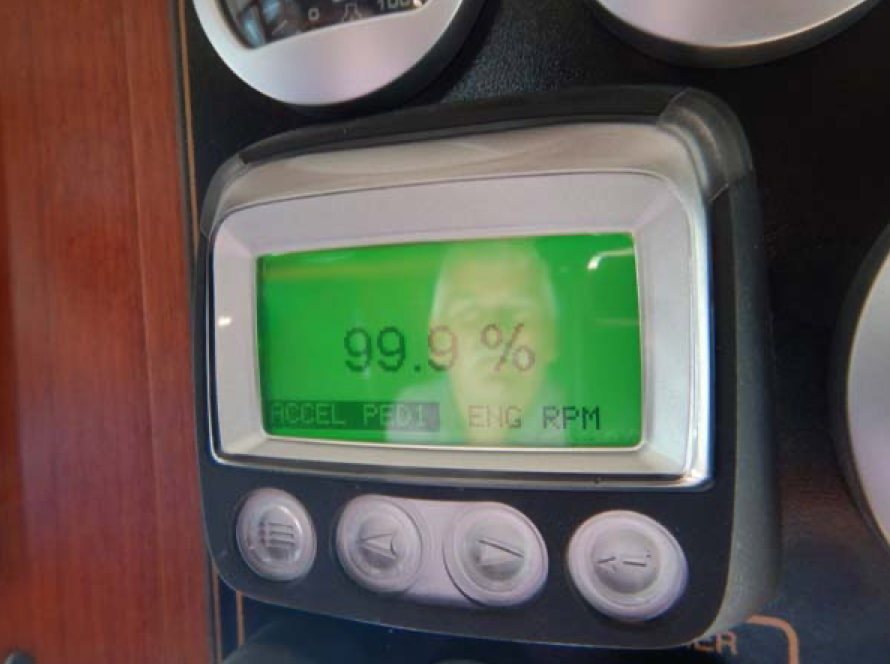
Your owner's manual specifies the recommended operating ranges and, critically, the maximum recommended wide-open throttle (WOT) RPM. Don't guess. Most marine engines also have a decal on the engine cover or flame arrestor showing the exact WOT RPM range—usually a span like "5,000-5,500 RPM." That's your target zone.
Run a Safe WOT Test
Get your boat out in calm water with minimal load. Ensure life jackets are worn and the kill switch lanyard is attached before attempting any WOT tests—safety first. Warm up the engine to operating temperature, then trim the outdrive to the manufacturer's recommended position and go to full throttle. Watch your tachometer.
If RPM is too low: Your engine might be running rough, have fouled plugs, or a restriction in fuel or air intake. A fouled lower unit can also drag RPM down.
If RPM is too high: This is where damage happens fast. Common causes:
- Wrong prop pitch: A prop that's too small (low pitch number) for your boat's weight will let the engine over-rev. Dropping from a 21-pitch to a 19-pitch prop will typically raise RPM by 400-600. We helped a boater in Australia who was hitting 6,500 RPM on an engine rated for 5,800. He was running a 19-pitch prop on a heavy deep-V hull that needed a 21-pitch. After the swap, he landed right at 5,600 RPM WOT—problem solved.
- Damaged or worn prop: A prop with bent blades or a chipped leading edge loses bite and lets the engine spin faster than it should.
- Internal engine problems: Worn rings or low compression can also cause high RPM with low thrust.
Adjust your outdrive or outboard trim during the test. Trimming out (bow up) typically raises RPM slightly; trimming in (bow down) loads the prop more and drops RPM. You need to find the trim angle that gives you the best speed and efficiency while staying in the WOT RPM range.
Modern Engine Management Systems
Most modern marine engines have built-in overspeed protection—systems like Mercury's Guardian Mode or Yamaha's SmartCraft. If you push past the programmed limit, the ECU cuts fuel or spark and the engine stutters. It feels like hitting a rev limiter in a car: a sudden, jarring interruption. That's the computer saving your engine. Don't fight it. If you're hitting the limiter consistently, you have a prop mismatch or another underlying problem. Learn more about systems like Mercury’s Guardian System to protect your engine.
Pay Attention to Load and Conditions
Remember that WOT RPM figures are quoted for specific conditions—usually calm water, half fuel, light passenger load. A test in choppy seas with a full tank and four passengers will yield different numbers. Be realistic about what your engine is doing under actual operating conditions.
Trust Your Ears and Observations
If the engine sounds strained, vibrates excessively, or just doesn't feel right when you're pushing hard, back off. Pushing an engine when it's complaining is rarely worth the repair bill.
Check your engine's pee stream or overflow while running. If it goes from a solid stream to a dribble, you're overheating. At idle, it might spit and sputter, but it should improve at throttle as the water pump spins faster. If it doesn't, you've got a blockage or a failing impeller. For tips on cooling system maintenance, see our post on Outboard Overheating 101: Quick Checks to Prevent Damage.
Most marine engines have a recommended cruising RPM around 3,500-4,500 RPM, which is roughly 70-80% of max. This gives you good speed, decent fuel economy, and keeps wear reasonable. Constantly running at WOT burns fuel and shortens engine life.
After every saltwater ride, flush your engine with fresh water for at least 10 minutes using the flushing port. This keeps the raw water passages clear and prevents the thermostat from seizing due to salt buildup. For detailed flushing instructions, see our guide on how to replace the thermostat on your Yamaha outboard.
For more insights on boat parts and maintenance, visit JLM Marine.
Hi—I’m Jim Walker
I grew up in a Florida boatyard, earning pocket money (and a few scars) by rebuilding outboard carbs before I could drive. That hands-on habit carried me through a Ph.D. in mechanical engineering, where I studied how salt water quietly murders metal.
I spent ten years designing cooling systems for high-horsepower outboards, then joined JLM Marine as CTO. We bench-test every new part in the lab, but I still bolt early prototypes onto my own 23-foot skiff for a weekend shake-down— nothing beats real wake and spray for finding weak spots.
Here on the blog I share the fixes and shortcuts I’ve learned so your engine—and your day on the water—run smooth.

Para propietarios de embarcaciones:
Para ayudarlo a mantener y reparar sus motores marinos, esperamos que los siguientes recursos puedan serle de utilidad:
- Guía de números de serie de Mercury
- Manuales del propietario de Mercury
- Guía de referencia oficial de números de modelo en formato PDF de BRP
- Guía de números de serie de Johnson
-
Accesorios para barcos de JLM Marine
Acerca de JLM Marine
Fundada en 2002, JLM Marine se ha consolidado como un fabricante dedicado de piezas marinas de alta calidad, con sede en China. Nuestro compromiso con la excelencia en la fabricación nos ha ganado la confianza de las principales marcas marinas a nivel mundial.
Como proveedor directo, evitamos intermediarios, lo que nos permite ofrecer precios competitivos sin comprometer la calidad. Este enfoque no solo promueve la rentabilidad, sino que también garantiza que nuestros clientes reciban el mejor valor directamente del proveedor.
Estamos entusiasmados de ampliar nuestro alcance a través de canales minoristas, llevando nuestra experiencia y compromiso con la calidad directamente a los propietarios de embarcaciones y entusiastas de todo el mundo.
Accesorios para barcos en oferta
- $37.99
$45.99- $37.99
- Unit price
- per
- $34.99
- $34.99
- Unit price
- per
- $128.99
- $128.99
- Unit price
- per

- $25.30
$30.00- $25.30
- Unit price
- per


- $34.99
$41.99- $34.99
- Unit price
- per

- $25.99
$31.00- $25.99
- Unit price
- per

- $139.99
- $139.99
- Unit price
- per


- $17.99
- $17.99
- Unit price
- per
-
Rojo
-
Azul

- $24.95
$29.00- $24.95
- Unit price
- per

- $159.99
- $159.99
- Unit price
- per


- $105.00
- $105.00
- Unit price
- per


- $34.99
$41.99- $34.99
- Unit price
- per


- From $68.00
- From $68.00
- Unit price
- per
-
Plata
-
Azul
-
Rojo


- $34.99
$41.99- $34.99
- Unit price
- per

- $59.95
$71.00- $59.95
- Unit price
- per


- $34.99
$41.99- $34.99
- Unit price
- per

- $65.50
$78.00- $65.50
- Unit price
- per

- $54.99
$65.00- $54.99
- Unit price
- per

- $19.99
- $19.99
- Unit price
- per

- $19.95
- $19.95
- Unit price
- per