


Grinding Noise in the Lower Unit: Signs of Gearbox Trouble

If you're hearing grinding from your lower unit, stop using the engine and figure out why. That noise means metal is scraping metal somewhere in the gearcase, and the longer you run it, the worse the damage gets. I've pulled apart hundreds of lower units over the last 20 years, and the pattern is always the same: a little grinding ignored becomes a full teardown with a four-figure bill.
The lower unit is your outboard's final drive. It takes engine rotation and converts it through a set of gears into propeller thrust. Inside that aluminum housing you've got forward and reverse gears, a pinion gear on the driveshaft, bearings supporting the prop shaft, clutch dogs that engage the gears, and all of it running in gear lube. When those parts start grinding, something fundamental has failed—lubrication, alignment, or the parts themselves.
What Grinding Actually Means
Grinding is the sound of gears that aren't meshing cleanly. It's a harsh, metallic scraping that usually happens during a shift or under load. You might hear it when you slam the throttle into forward, or it might show up as a constant rasp at cruising speed. Either way, it's bad.
The gears in your lower unit have precisely cut teeth that are supposed to slide together smoothly. When they grind, those teeth are either damaged, misaligned, or they're trying to engage without enough lubrication to let them slide. Every time you hear that sound, you're shaving off more metal. Those shavings circulate in the lube and act like sandpaper on the bearings and shaft surfaces, spreading the damage.
Grinding vs. Whining vs. Clunking
Learn to tell these apart because they point to different problems.
Grinding is harsh and grating. It's the sound of gear teeth or a clutch dog trying to engage against resistance. This is your urgent warning.
Whining is a higher-pitched noise that rises and falls with RPM. It usually means a bearing is wearing out or the prop shaft is slightly bent, putting side-load on the bearings. It's a problem, but you have more time than with grinding.
Clunking is a single, sharp knock. You'll hear this when the clutch dog engages if your shift cable is adjusted too loosely or if you're shifting too slowly. A clunk when you shift into gear is normal on some dog-clutch outboards; grinding is never normal.
Why Your Lower Unit is Grinding
Low or Contaminated Gear Lube
This is the number one killer. In our shop, low or contaminated lube accounts for at least 70% of the lower unit failures we see. If the lube level drops—maybe from a leaking seal or a drain plug that backed out—the gears start running dry. Without that film of oil between the teeth, you get metal-on-metal contact and instant wear.
Water intrusion is worse. If a shaft seal fails, water gets into the gearcase and mixes with the oil, turning it milky. Water doesn't lubricate. It causes rust and corrosion on the gear teeth, and it breaks down the oil's ability to protect anything. We had a customer last season who lost his drain plug on a lake trip; he didn't notice, the oil floated out, lake water filled the case, and by the time he got back to the ramp the clutch dog had welded itself to the gear and torn the whole assembly apart. The vertical shaft pinion looked like it had been chewed by a grinder.
If your lube is milky or if you see metallic flakes on the drain plug, you've got a serious problem that needs fixing immediately.
Worn or Damaged Gear Teeth and Bearings
Gears and bearings wear out. High hours, hard use, and sometimes just bad luck will chip a gear tooth or pit a bearing race. Once a tooth is chipped, every rotation slams that damaged spot against the mating gear, making the damage worse. Bearings that are worn create slop in the shaft, letting the gears misalign slightly, which also causes grinding.
Checking your gear lube is the easiest way to catch this early. If the oil on your magnetic drain plug is covered in fine metallic fuzz, that's normal wear. If you see chunks or heavy flakes, your gears or bearings are disintegrating.
Shift Linkage and Cable Problems
Sometimes the grinding isn't internal damage—it's your shift cable. If the cable is stretched, corroded, or incorrectly adjusted, the shift mechanism won't fully engage the clutch dog when you move the control lever. The dog tries to engage while the gears are still spinning at different speeds, and you hear a crunch.
Here's how to check: with the engine off, disconnect the shift cable at the engine. Manually move the shift lever on the engine itself. If it moves smoothly and clicks into gear without any grinding feel, your problem is the cable or the remote control, not the gearbox. If you still feel or hear resistance, the problem is inside.
A stretched cable is an easy fix compared to a rebuild, but don't ignore it. Every time that clutch dog grinds, it spreads metal shavings through the lower unit. Those shavings will eventually score the bearings and gears, turning a $150 cable job into a $2,000 teardown.
Propeller Shaft or Gear Damage from Impact
Hit a rock, stump, or sandbar hard enough and you'll bend the prop shaft or crack a gear. A bent shaft wobbles as it spins, putting side-load on the bearings and causing the gears to bind or grind under power. We see this a lot with bass boats that get run hard in shallow water.
If you hit something, pull the boat out and check the prop. Spin it by hand with the engine off and in gear. It should rotate smoothly with no wobble. If the shaft is bent, you'll feel it. Pull the prop and inspect the shaft splines for damage while you're at it.
Water Pump and Cooling System Failure
A failed water pump or clogged intake can cause the engine to overheat. Overheating warps metal, degrades the gear lube, and puts stress on every bearing in the lower unit. The result is often a grinding noise that develops after a long run at high RPM when the engine has been running too hot.
Check your telltale (pee stream) regularly. It should be a strong, steady stream at idle and above. If it's weak or nonexistent, your cooling system has a problem that will cascade into lower unit damage if you keep running. Consider checking for and replacing the water pump impeller with quality parts available in our Cooling System collection to maintain proper engine temperature.
Engine Misfire
This one surprises people, but a rough-running engine can make the lower unit sound like it's falling apart. If one or more cylinders are misfiring, the engine produces uneven pulses that resonate through the driveshaft and into the gearcase. The vibration rattles the aluminum housing and can sound like grinding or a mechanical failure.
We had a Crusader-powered boat come in last year with what the owner swore was a transmission grinding at idle. Turned out to be a dead cylinder. Fixed the misfire, and the "grinding" disappeared. If the noise is present at idle in neutral and gets worse in gear, check your ignition and fuel delivery before you tear into the lower unit. For addressing fuel-related issues, inspection and replacement of fuel system parts in the Fuel & Induction collection could be helpful.
How to Diagnose Grinding in Your Lower Unit
Listen and Document When It Happens
Pay attention to exactly when you hear the grinding. Does it only happen when you shift? Does it happen under load at a certain RPM? Does trimming the drive up or down change it? Write it down. This helps narrow the cause.
If the grinding only happens during the shift and then stops once you're in gear, it's likely a shift linkage or clutch-dog issue. If it's constant and gets worse with throttle, you probably have gear or bearing damage.
Inspect the Gear Lube
This is your most important diagnostic step, and you can do it in your driveway.
What you need:
- Flathead screwdriver or socket (size depends on your unit—usually 3/8" or 1/2" square plug)
- Drain pan
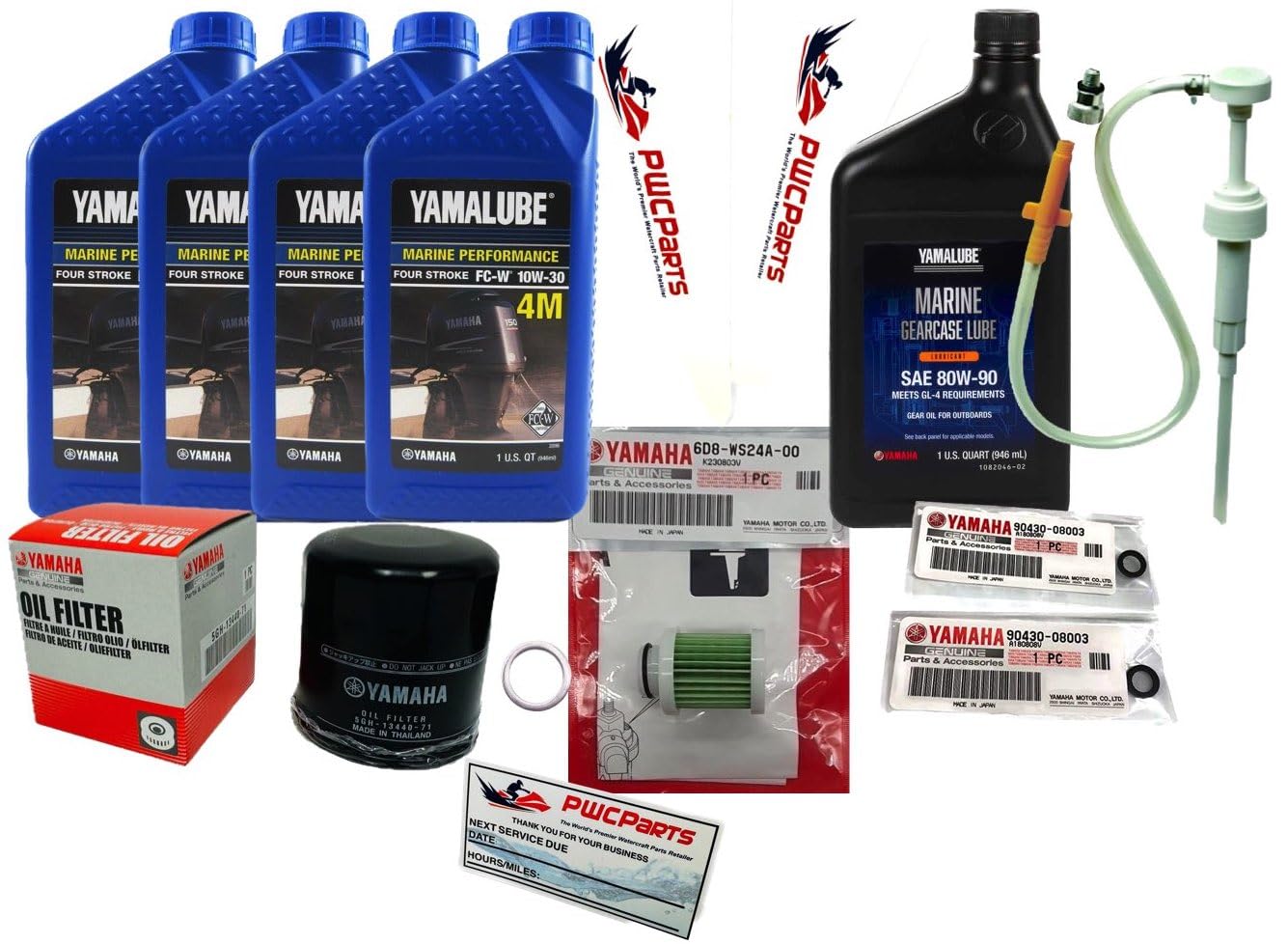
- Gear lube pump
- Fresh marine gear lube (check your manual for the correct viscosity and spec)
Steps:
- Put the boat on a level surface or trailer it level.
- Locate the lower drain plug (bottom of the gearcase) and the upper vent/fill plug (usually on the side near the top of the case).
- Remove the vent plug first to break the vacuum, then remove the drain plug and let the lube drain completely into your pan.
- Look at the oil. This is where you learn what's going on inside.
What you're looking for:
- Milky or gray color = Water intrusion. Your seals are shot. Do not run this engine until the seals are replaced and the lube is changed.
- Metallic glitter or chunks = Metal is being ground off the gears or bearings. Fine fuzz on the magnetic drain plug is normal wear. Heavy sparkles, flakes, or chunks mean you're looking at a rebuild.
- Black and thick = Old, heat-damaged lube. Change it and monitor.
- Clean amber or golden = Good. If the lube looks fine but you still have grinding, the problem is likely not lubrication-related.
- Refill from the lower plug using a gear lube pump. Fill until fresh lube just starts to dribble out of the upper vent hole, then quickly replace the vent plug. Remove the pump and immediately replace the lower drain plug. Critical: Never fill from the top vent hole. Filling from the bottom forces air out as the lube rises. Filling from the top traps air pockets at the bottom, which will starve the gears.
Check the Propeller and Shaft
Pull the prop. Inspect the shaft splines for wear or corrosion. Spin the prop shaft by hand (with the engine off and in forward gear). It should turn smoothly with slight resistance from the gears. If you feel grinding or binding, that's confirmation of internal damage.
Look for a spun hub. If the rubber hub inside the prop has spun, the prop will slip under load and sometimes make a grinding or chattering sound that seems to come from the lower unit but is actually the prop.
Run a Shift Test
With the engine running at idle in the water (never run an outboard out of water unless you have a flushing system), shift through forward, neutral, and reverse. Listen closely. Does the grind happen at the exact moment of the shift, or does it happen after you're in gear?
If it grinds during the shift and then goes quiet, adjust or replace your shift cable. If it grinds after you're in gear and stays grinding, you have internal damage.
Detailed guidance on shift cable adjustment can be found in our related tutorial on Fixing Your Outboard Throttle: Adjusting Yamaha F40 Cable Play for 100% WOT.
Trim and Gimbal Test (for Sterndrives)
If you have a sterndrive and the grinding only happens when the drive is trimmed up, you may have a bad gimbal bearing. The gimbal bearing supports the front of the drive shaft where it passes through the transom. When it wears out, the shaft wobbles and the gears inside the lower unit bind, especially at certain trim angles.
Raise and lower the drive slowly while someone listens. If the grinding gets louder as the drive lifts and goes away when it's down, the gimbal bearing is the likely culprit, not the gears.
Repair and Maintenance Options
Gear Lube and Seal Service
If your lube is contaminated but you haven't found chunks of metal yet, a seal replacement and fresh lube might save the unit. Replace the propeller shaft seal, the driveshaft seal, and the shift shaft seal. Refill with fresh lube and monitor it every few hours of runtime. If the lube stays clean, you caught it in time.
Cost: Seal kit and lube typically run $50–$150 depending on the engine. Labor is about 2–3 hours if you're paying a shop, so expect $300–$500 total if you don't DIY.
Shift Cable Adjustment or Replacement
If the grinding is from poor cable adjustment, fixing it is straightforward. Most outboards have a barrel adjuster at the engine where the cable attaches. You want the shifter to engage fully into forward and reverse with a solid detent, not a mushy half-engagement.
If the cable itself is corroded or stretched, replace it. A new shift cable runs $80–$200 depending on length and brand, and the job takes about an hour.
Propeller Shaft Repair
Bent shaft or damaged splines require pulling the lower unit and pressing out the old shaft. A new OEM shaft will run $200–$400, and you'll need new seals and bearings while you're in there. Total cost at a shop: $600–$1,200.
Lower Unit Rebuild
If you found metal in the lube and the gears are chewed up, a rebuild is your best option if the housing is still intact.
What gets replaced:
- Forward, reverse, and pinion gears
- Bearings (input and output shaft)
- All seals
- Clutch dog and slider
- Shift components if worn
A good rebuild kit costs $300–$800 depending on the model. Labor runs 6–10 hours because the entire unit has to come off the engine, be disassembled, cleaned, inspected, reassembled, and reinstalled. Expect a shop bill of $1,500–$3,000 for a full rebuild.
Lower Unit Replacement
Sometimes the housing is cracked, or the damage is so severe that a rebuild costs more than a replacement. You have a few options:
- New OEM lower unit: $2,500–$5,000+. You're paying for the manufacturer's name and warranty.
- Remanufactured unit: $1,200–$2,500. These are factory cores that have been rebuilt to spec. Good quality if you buy from a reputable source.
- Used lower unit: $400–$1,200. You're gambling on the condition, but if you're dealing with an older outboard it's often the most economical choice.
Swapping a lower unit is a 2–3 hour job. You're looking at $2,000–$6,000 all-in depending on which route you take.
Why Quality Parts Matter
Don't cheap out on a lower unit rebuild. We've seen $40 seal kits from random online sellers that use rubber so stiff the seals leak from day one. The customer ends up doing the job twice and grenading the fresh gears with water intrusion a month later.
OEM parts are good but overpriced. You're paying a 50–100% markup for the logo on the box. Non-OEM quality ranges wildly. Some factories that manufacture for the OEMs run excess capacity and produce non-branded parts that are identical in spec—these are what we stock. You get factory-spec fitment and material quality without the dealership markup. Browse our Inboard & Outboard Motor Parts collection for premium parts at factory-direct prices.
Preventing Grinding and Lower Unit Failure 
Check Your Gear Lube Every Season
Pull the drain plug at the start of the season, mid-season, and before winter storage. It takes 10 minutes. Look for water contamination or metal. Change the lube if it's milky, if it smells burnt, or if you see any metal beyond light fuzz.
Use the lube specified in your owner's manual. Most outboards call for 80W-90 or 90 weight marine gear lube, but some require specific additives or viscosities. Using automotive gear oil or the wrong weight can cause shifting problems and increase wear.
Shift Firmly and Cleanly
Don't slam the shifter, but don't baby it either. The clutch dog is designed to engage with a quick, firm motion. Easing it slowly into gear makes the dog and gear grind together instead of snapping cleanly into engagement. That grinding chips the dog and gears over time.
Shift at idle or just above idle, never at high RPM. Let the engine settle into neutral for a full second before shifting into reverse if you're coming out of forward. This lets the gears stop spinning and prevents clash.
Avoid Underwater Obstacles
This is obvious but it's worth saying: hitting stuff destroys lower units. Sandbars, stumps, rocks, and dock pilings will bend shafts, crack housings, and shear gears. If you do hit something, check the prop and the gearcase immediately. Spin the prop by hand and look for any leaks or cracks. Drain and inspect the lube. Catching a bent shaft early means a $600 repair instead of a $3,000 one.
Flush After Every Saltwater Use
After every saltwater trip, hook up a motor flusher or flush mute and run fresh water through the cooling system for at least five minutes. This keeps salt from corroding your water pump housing and lower unit seals, preventing leaks that let water into your gear lube. Learn more about this procedure in our Water Pump Repair Kit vs. Impeller Only guide.
Watch Your Cooling System
Your water pump impeller should be replaced every 2–3 years or every 200–300 hours, whichever comes first. A failed impeller restricts water flow, the engine overheats, and the lower unit suffers secondary damage from the heat. Check your telltale pee stream at the start of every trip. If it's weak, don't run the engine until you've replaced the impeller.
When to Call a Mechanic
Stop Running If You Hear These
- Sudden, loud grinding that wasn't there before
- Jumping or slipping when you shift into gear
- Heavy vibration through the steering or hull
- Leaking gear lube from the propeller shaft or gearcase seam
Any of these means you're actively destroying the lower unit. Shut it down, pull the drain plug, and inspect the lube. If you see metal or milky oil, do not start the engine again. Have it towed or trailered to a shop.
What a Shop Can Do That You Can't
A good marine mechanic has a hydraulic press to remove and install bearings and shafts without damaging the housing. They have dial indicators and run-out gauges to check shaft alignment. They know the torque specs and shimming procedures for your specific gearcase. If you've never torn down a lower unit before, don't start with one that's already damaged—you'll likely make it worse.
Shops also have access to OEM service bulletins and parts diagrams. Some lower units have revised parts or specific failure modes that are only documented in service literature. Paying a tech who's done 50 of your exact model is cheaper than buying the wrong parts three times and destroying a housing because you didn't shim the pinion correctly. For more on this, visit our JLM Marine home page.
Why Professional Diagnosis Prevents Bigger Bills
We've had customers bring in lower units with "grinding noises" that turned out to be a $12 impeller fragment stuck in the water jacket, a loose propeller nut, or a bad motor mount transmitting engine vibration. Spending $150 on a diagnostic inspection can save you from a $2,000 misdiagnosis.
Frequently Asked Questions
What does grinding noise when shifting gears mean?
It means the clutch dog or gears aren't engaging cleanly. Either your shift cable needs adjustment, the clutch dog is worn, or the gears are damaged. Check your shift linkage first; if that's fine, you likely have internal wear.
Can low transmission fluid cause gear grinding?
Yes. Low gear lube is one of the most common causes of grinding. Without enough lube, the gears run metal-on-metal, overheat, and wear rapidly. Check your lube level immediately if you hear grinding.
Is it safe to keep driving with a grinding transmission noise?
No. Every minute you run it, you're shredding more metal and spreading it through the bearings and gears. What might be a $500 repair now will be a $3,000 disaster if you keep running it. Stop, inspect, and fix it.
How often should transmission fluid be changed to avoid grinding?
Change your lower unit gear lube every 50–100 hours or once per season, whichever comes first. If you run in saltwater, lean toward the 50-hour interval. If you hit something or notice a leak, change it immediately and inspect for damage.
What is the difference between grinding noise and whining noise in a transmission?
Grinding is a harsh, grating sound that usually means gears or a clutch dog are clashing. Whining is a higher-pitched hum that changes with RPM; it typically indicates a worn bearing or slight shaft misalignment. Grinding is more urgent.
Can I fix transmission grinding noise myself?
You can check and change the gear lube, inspect the prop, and adjust the shift cable yourself. If those don't solve it, you're looking at an internal repair that requires pulling the lower unit, disassembling it, and replacing gears or bearings. That's a job for someone with the tools and experience unless you've done it before.
When is a transmission rebuild necessary?
When you find metal chunks in the lube, when the gears are visibly chipped or broken, or when bearings are worn enough that the shaft has play. If fresh lube and a cable adjustment don't fix the grinding, assume you need a rebuild.
What are common transmission error codes related to grinding?
Most outboards don't use OBD-II codes. Instead, watch for "Guardian Mode" activation (engine limiting RPM to protect itself), continuous audible alarms, or specific beep patterns that indicate overheating or low oil pressure. On electronically controlled engines, the display may show fault messages related to shift position or drive engagement. If your engine has NMEA diagnostics, a scan tool will show shift-position mismatch or clutch-engagement faults, but these aren't standardized the way automotive codes are.
Sources:
- ePropulsion – Outboard Motor Lower Unit Overview: https://www.epropulsion.com/news-media/electric-boating-blog/outboard-motor-lower-unit
- Boaters World – 5 Signs of a Bad Outboard Lower Unit: https://www.boatersworld.com/blog/5-signs-of-a-bad-outboard-lower-unit-on-a-boat--61558
- Mariners Warehouse – Why Is Your Outboard Lower Unit Making Strange Noises?: https://marinerswarehouse.com/why-is-your-outboard-lower-unit-making-strange-noises/
- Scientific Research Publishing – Marine Vessel Propulsion Shaft and Gearbox Failure Analysis: https://www.scirp.org/journal/paperinformation?paperid=102043
- DieselPro – Troubleshooting Common Issues for Twin Disc MG502 Marine Gear: https://dieselpro.com/blog/troubleshooting-common-issues-for-twin-disc-mg502-marine-gear/
- Eureka PatSnap – How to Troubleshoot Common Issues in Marine Gear Systems: https://eureka.patsnap.com/article/how-to-troubleshoot-common-issues-in-marine-gear-systems
- YouTube – Grinding Noise When Shifting (Shift Cable Adjustment): https://www.youtube.com/watch?v=ZVleLYy5Q1g
- YouTube – Outboard Lower Unit DESTROYED: https://www.youtube.com/watch?v=TWsJWc2Yacc
- Born Again Boating – Catastrophic Outboard Engine Failures: https://www.bornagainboating.com/outboard-engine-failure-the-most-expensive-catastrophic-outboard-failures/
- YouTube – Marine Transmission Rattling Noise Common Misdiagnosis: https://www.youtube.com/watch?v=-8veQxE7SNc
- OffshoreOnly Forum – Grinding Noise When Outdrive Is Up: https://www.offshoreonly.com/forums/general-boating-discussion/354517-help-major-grinding-noise-when-outdrive-up-now-water-comin.html
- U.S. Coast Guard – Recalls and Safety Defects Database: https://uscgboating.org/content/recallsandsafety_defects.php