





Yamaha Outboard Beeping Alarms: What Do the Codes Mean?
- Quick Diagnosis: Match Your Beep Pattern
- How the Alarm System Actually Works
- The Big Three: Overheat, Oil, and Water in Fuel
- Decoding Fault Codes from the ECU
- Step-by-Step: What to Do When the Alarm Sounds
- When You Need a Mechanic, Not a Guess
- Two-Stroke vs Four-Stroke: Different Alarm Priorities
- False Alarms and Sensor Quirks You Should Know
- Limp Mode and RPM Limitation: What's Happening Under the Hood
- Your Model's Manual Is the Final Word

When your Yamaha outboard starts beeping, you need to know what it means right now. After two decades wrenching on these engines, I can tell you the beeps aren't random—they're specific warnings that tell you exactly what's going wrong.
Quick Diagnosis: Match Your Beep Pattern

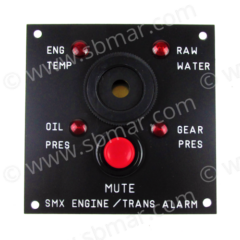
Before you read another word, match your alarm to this list:
- Continuous solid beep = Critical fault. Reduce throttle immediately. Likely overheat or critically low oil pressure. Engine is probably in limp mode.
- Intermittent beeps (repeating every minute or two) = Service needed soon but not catastrophic. Check oil level on 2-strokes, water in fuel separator, or sensors.
- Beeping only in neutral = Water in fuel sensor (common on F40, F150 four-strokes). Drain the separator.
- Beeps with flashing lights or text on digital gauge = Read the screen. Command Link displays will show "Overheat," "Low Oil," or a numeric code.
If you've got a solid continuous alarm and the engine won't pull past 3000 RPM, stop reading and shut it down. You're already in guardian mode.
How the Alarm System Actually Works
Your Yamaha's buzzer lives at the helm, connected to the engine's ECU through a network of sensors scattered across the powerhead. Temperature senders, oil level floats, fuel quality detectors, and voltage monitors feed data back to the brain. When a sensor reading crosses a safety threshold, the ECU fires the buzzer. On two-stroke models, you'll also see a three-light oil/overheat gauge that flashes to narrow down which system is yelling at you.
The newer four-strokes with Command Link or similar digital setups skip the guessing game. They'll display text warnings or store fault codes you can pull with diagnostic software. The ECU doesn't just beep—it can cut power to save the engine. That's limp mode, and it's not optional.
The Big Three: Overheat, Oil, and Water in Fuel
Most alarms we see in the shop trace back to three systems.
Overheat Alarms and What's Really Causing Them
Overheating triggers a continuous alarm and will slam you into reduced power. The usual suspects:
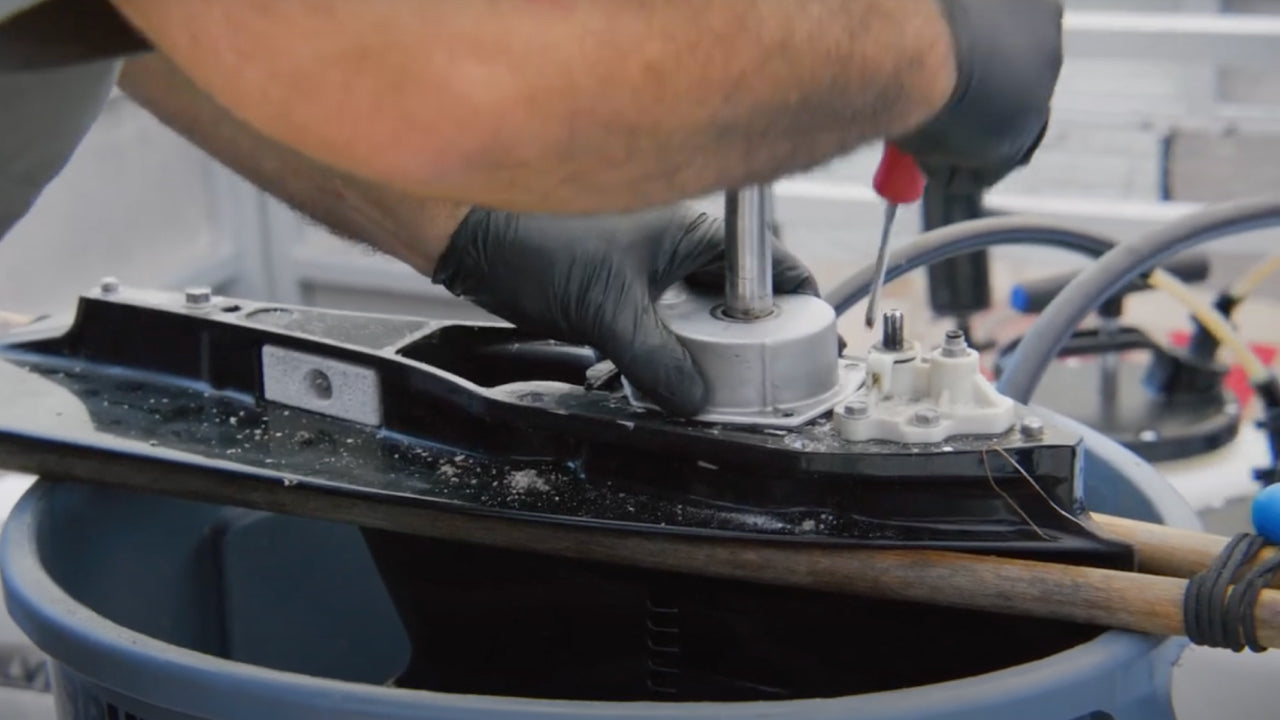
Worn water pump impeller. This is the number-one cause, bar none. A worn impeller can't move enough water at low speeds, and by the time you notice weak flow from the tell-tale, you're already cooking the heads. We've pulled impellers that were missing half their vanes but still dribbling enough water at idle to fool an owner for weeks. At higher RPM or after a long troll, the engine finally heat-soaks and the alarm screams. If you're looking to maintain or replace this component, checking out our Yamaha Water Pump Impeller collection can help you find the right part.
Clogged thermostats or cooling passages. Salt, calcium, and sand pack into the cooling galleries over time. On a Yamaha OX66 225 we serviced last season, the starboard bank was running 200°F while the port side sat at 130°F. Infrared temp gun showed it clear as day. The owner had been getting intermittent overheat alarms for weeks. We ran an 8:1 water-and-vinegar flush for hours to break up the mineral crust near the thermostat, replaced the pump and thermostats, and flushed clean. Temps equalized, alarm gone. For more on thermostat care, see our detailed guide on thermostat maintenance.
Restricted tell-tale. The tell-tale itself doesn't cause the alarm, but a weak stream is your early warning. If water spits at idle but improves with throttle, you've got marginal cooling flow—often a pump on its last legs or a partial blockage.
Oil Alarms on Two-Stroke Engines
If you're running an older two-stroke with oil injection, the alarm is your lifeline.
Low oil level. Straightforward. The float in the remote tank or engine-mounted reservoir drops, the sensor closes, and the buzzer fires. On some models, if the oil runs critically low, the alarm sounds constantly—even at key-on before you crank the engine—and the ECU drops you into limp mode on the spot. Top off the tank, verify the transfer pump is moving oil from the remote reservoir to the engine, and the alarm should stop. If the tank is full but the alarm persists, check the oil transfer system and level sensor wiring.
Faulty oil sensors or transfer pumps. Less common but real. A stuck float or corroded sensor connector can lie to the ECU and trigger false alarms. We've had to bypass faulty remote-tank sensors on emergency calls, running straight off the engine-mounted reservoir until the part arrived.
Water in Fuel and the Neutral-Only Beep Mystery
Modern Yamahas with a water-separating fuel filter often include a sensor in the separator cup. When water accumulates, it lifts a small float or trips the sensor, and the buzzer sounds.
Here's the weird part: on many four-strokes, this alarm only beeps when you're in neutral. The moment you shift into gear, it stops. We see this constantly on F40s and larger four-strokes. The wiring harness running from the bottom of the fuel filter to the engine harness is your clue that the water-detection feature is active.
A pontoon owner with a 2015 F40LA had exactly this symptom. Beeping in neutral, silent in gear. Manual confirmed it was the water-in-fuel warning. We drained the tank, pumped out the old fuel (it separated into layers in a clear jug—water on the bottom, gas on top), flushed the lines, cleaned the separator, and installed a new filter element. Fresh gas in, alarm gone. Find the right fuel filters for Yamaha to keep your fuel system clean and well-maintained.
Voltage, Electrical Faults, and Sensor Lies
Sometimes the problem isn't mechanical.
Low charging voltage. A weak battery or failing alternator can drop voltage below the ECU's threshold (usually around 11.5 volts), and some Yamaha systems interpret that as a fault condition. The horn sounds, you see a voltage warning light, and the engine may hesitate. Charge or replace the battery, test the stator output, and verify all connections at the battery terminals are tight and corrosion-free.
Wiring and sensor failures. A frayed temperature sensor wire or a corroded oil pressure sender can send garbage data to the ECU. The alarm fires, sometimes intermittently, and stops when the bad connection flexes back into contact. These are a pain to chase because they're not consistent. Use a multimeter to check sensor resistance and compare it to spec in the service manual. On a Yamaha 150 we diagnosed last fall, a temp sensor was reading open-circuit at idle (sensor resistance should be around 200–300 ohms at 77°F), triggering random overheat alarms even though the engine was stone cold.
Decoding Fault Codes from the ECU
If you've got digital gauges, you're ahead of the game. Yamaha's ECU stores numeric fault codes—things like Code 13 (pickup coil signal), Code 28 (shift position switch), Code 72 (various sensor faults depending on model)—that technicians read with Yamaha Diagnostic System (YDS) software or compatible scan tools.
Common Numeric Codes You'll See
Here's a short list of codes we pull frequently in the shop:
- Code 13: Pickup coil / ignition timing sensor fault. Check the stator and pickup coil wiring.
- Code 23: Knock sensor circuit (four-strokes). Often a wiring issue or bad sensor ground.
- Code 28: Shift position switch. The ECU can't tell what gear you're in; check the shift linkage and switch connector.
- Code 62: Water-in-fuel signal (on models with the sensor). Drain the separator and verify the float isn't stuck.
- Code 72: This is a catch-all on many models for "sensor out of range" or voltage anomalies. We've seen it triggered by a momentary voltage spike or a temp sensor reading slightly high for one second. The ECU logs it, the gauge displays it later, and the code sits there until cleared even though the actual fault is long gone.
A Grady-White owner had Code 72 pop up, disappear, then return on the next trip. The tech found a single stored event from early in the first outing—likely a voltage blip when cranking. Until the code was cleared from memory, the ECU kept resending it to the gauge on startup. Once cleared, no more alarms. This is why you need to distinguish between active faults (happening right now) and historic faults (stored in memory from days ago).
How to Read the Codes Yourself
If you don't have YDS software, you're limited to what the gauge shows. Command Link and similar digital displays will show text warnings or a numeric code on-screen when an alarm sounds. Write down the exact code, the conditions (RPM, load, water temp), and whether any lights were flashing. That's the data your mechanic needs.
For older analog setups with just lights and a buzzer, you're stuck counting beeps and checking the pattern against your owner's manual. Yamaha publishes a beep chart in every manual, indexed by Primary ID and model year. Look it up at the Yamaha owner's manual portal using your engine serial number, or consult our comprehensive Yamaha Outboard Serial Number Guide for help locating this information.
Step-by-Step: What to Do When the Alarm Sounds
You hear the beep. Here's the drill.
1. Reduce throttle immediately. Do not try to power through it. The alarm exists to stop you from grenading the engine.
2. Note the exact alarm pattern. Continuous or intermittent? Only in neutral or at all times? Any lights flashing? Text or codes on the gauge? This data is critical.
3. Check the owner's manual. Seriously. Your specific Yamaha model has a chart detailing what each beep pattern and code means. It's in the troubleshooting section.
4. Perform basic checks (if it's safe to do so):
-
Tell-tale flow: Is water coming out of the pee hole strong and steady, or is it dribbling? A weak stream at idle that gets stronger at 2000 RPM suggests a worn impeller. Need a water pump repair? See our guide on Water Pump Repair Kit vs. Impeller Only for when to replace a full kit.
-
Oil level (two-strokes): Pop the cowl and check both the remote reservoir and the engine-mounted tank. If either is low, top it off and verify the transfer pump is working.
-
Fuel filter/water separator: Look for water in the clear bowl. If you see a layer of water or the float is up, drain it and refill with fresh fuel. Explore our selection of Yamaha Fuel Filters to keep your system free of contaminants.
-
Visible wiring and sensors: Pop the cowl and eyeball the harness. Look for chafed insulation, corroded connectors, or loose grounds. Wiggle suspect connections while the engine is running (carefully) to see if the alarm changes.
5. If the alarm clears after a simple fix (topping off oil, draining water), monitor it closely. Sometimes these alarms are intermittent, and the underlying cause (a weak pump, a clogged passage) is still there.
6. If the alarm persists or is continuous, shut the engine down. A continuous alarm means the ECU thinks you're about to do damage. Don't argue with it. Call for a tow or limp home at idle if the alarm allows it and temps stay in the green.
When You Need a Mechanic, Not a Guess
There's a limit to what you can troubleshoot on the water with a screwdriver and a hunch.
If the alarm is continuous and basic checks (tell-tale, oil, fuel) don't solve it, shut it down and get it to a shop. Pushing a motor through a critical overheat or oil-starvation alarm is a fast way to seize pistons or warp heads.
If you're seeing intermittent alarms that come and go with no pattern, or digital codes you can't match to anything in the manual, it's time for diagnostics. A Yamaha-trained tech can connect YDS to the ECU, read live sensor data (coolant temp, oil pressure, voltage, injector pulse width), and pull stored fault codes with timestamps. This turns a guessing game into a data-driven diagnosis. They'll see exactly which sensor is lying, which circuit is open, or which subsystem is marginal.
We had a Yamaha 90 that would throw an overheat alarm only after running wide-open for 20 minutes, then the alarm would vanish at idle. Tell-tale was strong, temps looked normal on a laser thermometer. YDS showed the ECU was seeing a brief voltage spike on the temp sensor circuit at high load, likely from a corroded ground strap flexing under vibration. Cleaned the ground, secured the harness, problem solved. You can't find that with a screwdriver.
Two-Stroke vs Four-Stroke: Different Alarm Priorities
The alarm systems prioritize different things depending on whether you're running a two-stroke or a four-stroke.
Two-Stroke Oil-Injection Models
On a two-stroke with oil injection (older V-models, HPDIs), the oil alarm is king. These engines mix oil into the fuel stream on-demand, so if the oil runs out or the injection pump fails, you'll seize the motor in minutes. The alarm is wired to be impossible to ignore: continuous beeping, flashing oil light, and instant limp mode. If you hear it, stop and check oil immediately. The three most common causes we see are low oil level (easy fix), a clogged oil filter in the reservoir (mesh screen at the pickup), or a failed oil transfer pump (motor still runs but oil isn't moving from the remote tank to the engine).
Four-Stroke Sensor and Temperature Focus
Four-strokes don't have oil injection, so the alarm priorities shift to temperature and fuel quality. Overheat alarms are the big one—these engines rely on constant water flow through the block and head, and any interruption (failed impeller, stuck thermostat, clogged passages) will spike temps fast. The water-in-fuel sensor is another four-stroke staple; it's rare on older two-strokes but standard on modern four-stroke models with electronic fuel injection. The ECU is also more sensitive to voltage and sensor faults on four-strokes because there are more sensors (cam position, crank position, O2, throttle position) feeding data.
False Alarms and Sensor Quirks You Should Know
Not every alarm is a real emergency. Some are false positives triggered by sensor sensitivity or environmental conditions.
Oil tank float switches in rough water. On two-strokes, the float in the remote oil tank can bounce in heavy chop and momentarily trip the low-oil sensor, triggering a brief alarm even though the tank is full. If the alarm sounds for a second or two then stops, and your oil level is good, this is likely what happened. Some guys zip-tie a small foam float around the sensor pickup to dampen the motion.
Water-in-fuel sensors after a tank fill. If you just filled up and immediately get a water-in-fuel alarm, it's possible you stirred up sediment or condensation from the bottom of the tank. Let the fuel settle, drain the separator, and try again. We've also seen stuck floats in the separator cup—they get gummed up with ethanol residue and don't drop even after you drain the water. Tap the bowl sharply or pull the float and clean it with carburetor cleaner. For parts and maintenance solutions, consider browsing our fuel filter collection.
Voltage alarms at startup. A weak battery can momentarily sag below 11.5 volts during cranking, triggering a low-voltage alarm that clears once the engine fires and the charging system kicks in. If the alarm only happens on startup and never while running, test your battery under load and replace it if it's weak.
Temperature sensor "ghost" codes. We've seen ECUs log a high-temp fault code when the engine was actually cold, usually because the sensor wire rubbed through insulation and briefly grounded against the block. The alarm sounds for a split second, the ECU logs the event, and the code sits in memory until cleared. If you pull a temp-related code but the engine runs cool and the tell-tale is strong, check the sensor wiring for damage.
Limp Mode and RPM Limitation: What's Happening Under the Hood
When a critical alarm fires, the ECU doesn't just beep—it cuts power to protect the engine. This is variously called "limp mode," "guardian mode," or "reduced power mode" depending on the Yamaha literature, but it all means the same thing: the ECU is limiting RPM and/or ignition timing to prevent catastrophic damage.
On most models, limp mode caps engine speed at around 2000–3000 RPM. You'll feel it immediately—full throttle won't do anything, and the engine bogs like it's hitting a rev limiter. Some models also retard ignition timing, which makes the engine run rough and reduces power output even at the allowed RPM.
You can't "reset" limp mode by turning the key off and on. The ECU will re-enter limp mode instantly if the fault condition (low oil, high temp) still exists. The only way out is to fix the underlying problem. Top off the oil, let the engine cool, clear the water from the fuel—whatever the alarm is telling you to do. Once the sensor readings return to normal, the ECU will release limp mode on the next restart or after a few seconds of running.
On HPDI and some newer four-strokes, the ECU logs the fault and may require a deliberate code clear even after you fix the problem. This is where a scan tool or a trip to the dealer comes in. If you've fixed the overheat (new impeller, flushed passages, temps normal) but the engine still won't rev past 3000 RPM, there's likely a stored fault code holding you in limp mode until it's cleared from memory.
Your Model's Manual Is the Final Word
Everything I've written here is based on patterns we see across dozens of Yamaha models, but your specific engine's manual is the authority. Beep patterns, fault codes, and alarm behaviors vary by model year and engine family. A 2005 two-stroke 90 hp will have a different alarm logic than a 2020 F150 four-stroke, even though both are Yamaha.
Look up your owner's manual at Yamaha's online owner center using your engine serial number (the Primary ID stamped on the mounting bracket). The manual will have a dedicated section on warning systems, usually with a table listing each beep pattern, the corresponding fault, and the recommended action. It'll also list the digital fault codes specific to your ECU version. Not sure how to find your serial number? Our Yamaha Outboard Serial Number Guide is an excellent resource.
If you don't have the manual and can't find it online, call a Yamaha dealer with your serial number and ask them to email you the alarm-code chart for your model. They can pull it from the service database in about five minutes.
Pro tip: Flush your engine with fresh water after every saltwater use. Run it on the hose or use a flush bag for 10–15 minutes while the engine is idling. This washes salt, sand, and mineral deposits out of the cooling passages before they can build up and choke flow. It's the single easiest thing you can do to prevent overheat alarms, and most people skip it. For the best flushing parts, browse our cooling system parts collection.
Visit JLM Marine for all your premium factory boat parts and accessories shipped worldwide.
About JLM Marine
Founded in 2002, JLM Marine has established itself as a dedicated manufacturer of high-quality marine parts, based in China. Our commitment to excellence in manufacturing has earned us the trust of top marine brands globally.
As a direct supplier, we bypass intermediaries, which allows us to offer competitive prices without compromising on quality. This approach not only supports cost-efficiency but also ensures that our customers receive the best value directly from the source.
We are excited to expand our reach through retail channels, bringing our expertise and commitment to quality directly to boat owners and enthusiasts worldwide.
Water Pump Repair Kits on Sale
- $29.75
$35.00- $29.75
- Unit price
- per
- $16.99
$27.00- $16.99
- Unit price
- per
- $19.99
$23.00- $19.99
- Unit price
- per

- $27.99
$33.00- $27.99
- Unit price
- per

- $85.99
$103.00- $85.99
- Unit price
- per

- $35.00
$42.00- $35.00
- Unit price
- per
- $50.99
$59.00- $50.99
- Unit price
- per
- $39.89
$45.00- $39.89
- Unit price
- per
- $55.50
- $55.50
- Unit price
- per
- $39.98
$45.00- $39.98
- Unit price
- per

- $29.99
$35.00- $29.99
- Unit price
- per

- $45.99
$55.00- $45.99
- Unit price
- per

- $27.99
$33.00- $27.99
- Unit price
- per

- $49.99
$59.00- $49.99
- Unit price
- per

- $55.00
$66.00- $55.00
- Unit price
- per

- $36.00
- $36.00
- Unit price
- per

- $35.98
$43.00- $35.98
- Unit price
- per
- $26.90
- $26.90
- Unit price
- per

- $43.00
- $43.00
- Unit price
- per

- $19.50
$23.00- $19.50
- Unit price
- per
1 comment