


Genuine Mercury Parts vs. Third-Party Alternatives
- Quality Differences That Actually Matter
- Material Specs and Testing Standards
- The Serial Number Lookup Process
- Identifying Missing or Damaged Serial Tags
- Critical vs. Non-Critical Components
- Warranty and Return Policy
- Shipping and Availability
- Maintenance Intervals Using OEM Parts
- Which Lubricants Mercury Specifies
- Finding the Right Part Without a Serial Number
- Tools You'll Need for DIY Installs
- Common Misidentification Mistakes
- JLM Marine's Position in the Market
- What Mercury's Racing Division Changes
- Oil Analysis for Preventive Maintenance

Look, after 20 years working on outboards, the parts conversation always comes down to one question: do you want to fix it once, or fix it twice? I've pulled enough failed aftermarket fuel pumps to know the answer.
Quality Differences That Actually Matter

Genuine Mercury parts are built to the exact specs your engine was designed around. Third-party stuff? It's a mixed bag. Some factories that produce OEM parts also run aftermarket lines during off-hours—those can be solid. But you're also competing with bottom-dollar offshore junk that looks right in the box.
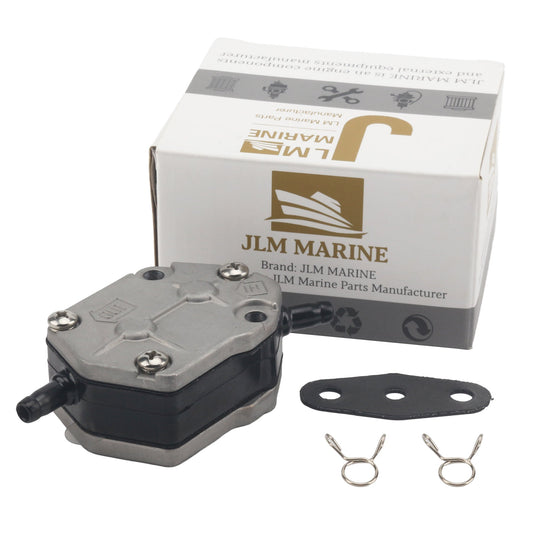
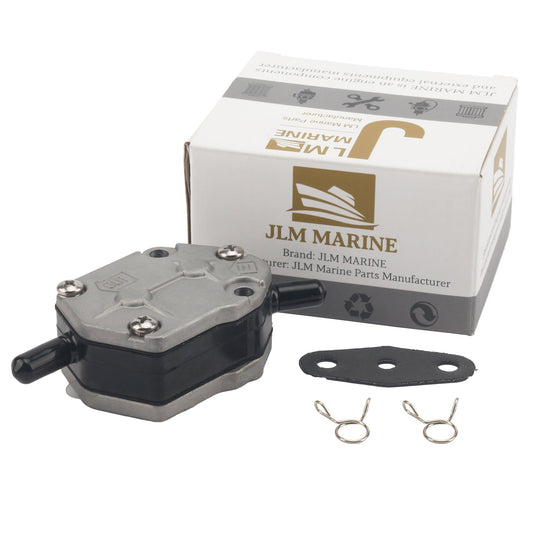
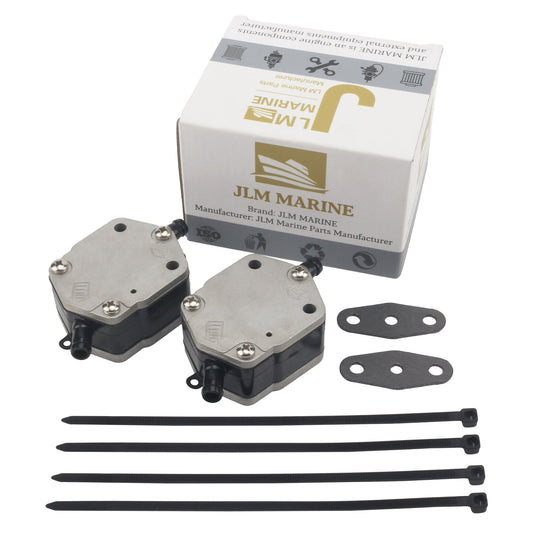
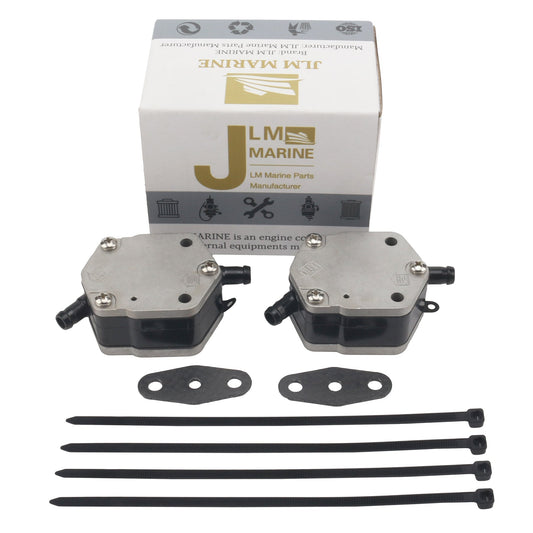
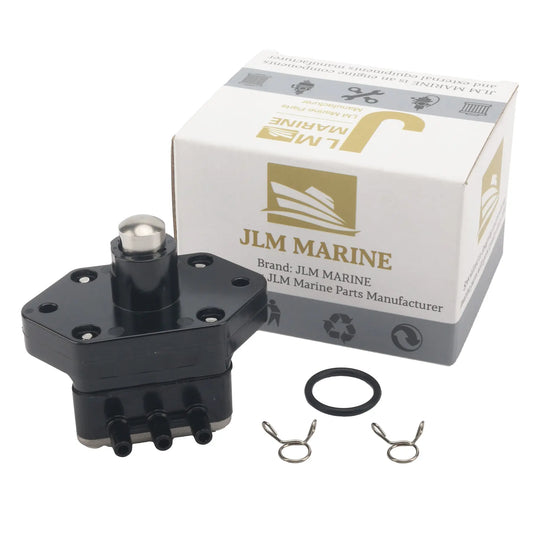
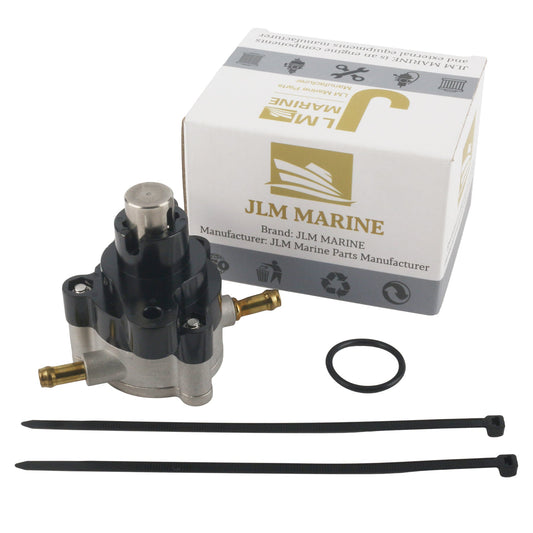
Here's what I see in the shop: aftermarket fuel pumps fail at around 200-300 hours. Genuine Mercury? You're looking at 1,000-1,500 hours before replacement. That's not a small gap—it's the difference between one season and five. The upfront cost difference is 20-40%, but when you're paying me $120/hour to tear the vapor separator off again, that savings evaporates fast. For reliable, factory-spec replacements, consider browsing our Mercury Fuel Pump collection, which offers genuine parts direct from the factory.
When Aftermarket Causes Cascade Failures
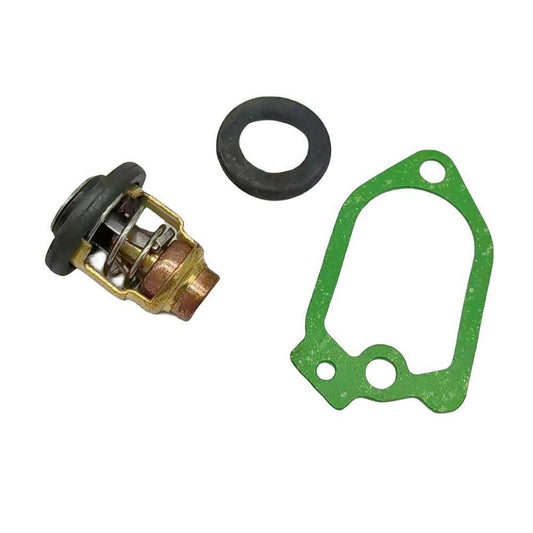
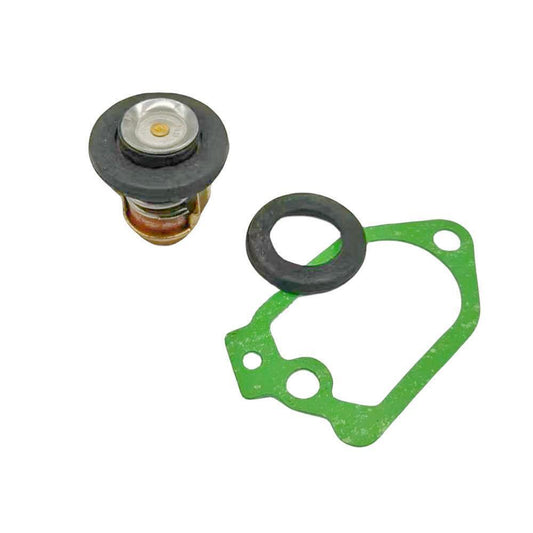
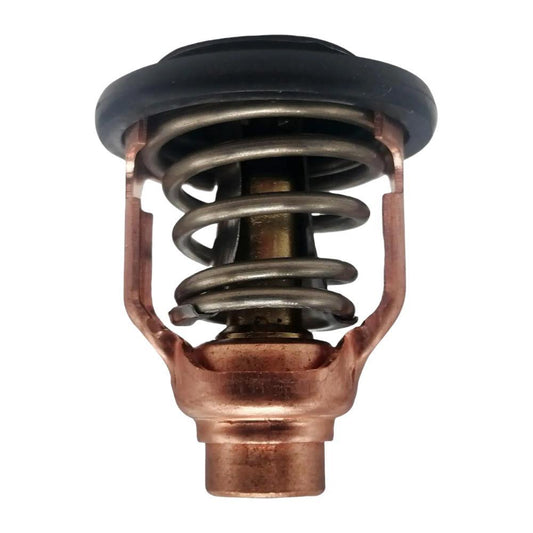
I had a 150 Verado come in last summer with a seized powerhead. Customer had installed a cheap aftermarket thermostat six months prior. The thing stuck closed at half-open—not enough to trigger the overheat alarm, but enough to run the heads at 195°F instead of 165°F. Slow-cooked the head gaskets. By the time he noticed steam, the damage was done: warped heads, blown gaskets, scored cylinder walls. A $45 thermostat turned into a $7,800 rebuild.
Genuine Mercury thermostats use a specific wax-pellet compound tested for saltwater corrosion resistance and calibrated to open at exactly 143°F. The aftermarket one? Random wax, no QC, and it started degrading the day it hit saltwater. For guidance on thermostat maintenance to avoid such issues, see our detailed post on Thermostat Maintenance: Keeping Your Outboard Running Cool.
Material Specs and Testing Standards
Mercury runs rigorous salt-spray tests on components—500+ hours in a chamber simulating years of coastal use. Impellers get cyclic fatigue testing: 10,000 wet-dry cycles to verify the nitrile compound won't crack. Ignition coils go through thermal shock between -20°F and 180°F to match engine bay extremes.
Most aftermarket suppliers skip this. They'll match dimensions and call it good. But if the stainless in a shift shaft is 304 instead of 316, it'll pit out in two years. If the rubber durometer in a grommet is off by 5 points, it'll leak. You won't know until it fails.
Third-Party Quality Spectrum
Not all aftermarket is trash. Brands like JLM Marine source from the same factories that supply OEMs, using identical tooling and materials. You get factory-spec quality without the dealership markup. Sierra's mid-tier stuff holds up fine for non-critical items—hose clamps, zinc anodes, basic hardware.
But here's the gamble: quality control varies wildly. I've seen Sierra distributor caps that were perfect, and others where the carbon post was 2mm too short, causing misfires. With genuine Mercury, that variance doesn't exist. Every part matches the engineering drawing to ±0.001". For premium alternatives that match OEM standards, explore our JLM Marine parts, where we offer authentic components manufactured to exact specifications.
The Serial Number Lookup Process
Before you order anything, find your engine's serial number. It's stamped on a metal plate, usually on the port side of the swivel bracket where the engine clamps to the transom. On sterndrives, check the transom assembly or the block itself. Newer engines (post-2011) use a standardized format: two letters, six digits, then a letter for the year code (e.g., "1B234567K" means 2020 production).
Punch that number into Mercury's parts lookup tool—or ours—and it pulls the exact parts catalog for your engine. This matters because Mercury updates components mid-year. A 2018 200 Verado built in March uses different injectors than one built in November. The serial number eliminates the guesswork. For a full guide on this process, refer to the Mercury Serial Number Guide.
Decoding Superseded Part Numbers
Mercury updates parts constantly. If you're looking at a diagram for a 2005 Optimax and see a part number with a diagonal line through it, that's superseded—discontinued and replaced by a newer version. The lookup tool auto-references the current number, but here's the trick: check the notes. Sometimes the new part requires a different gasket or mounting bolt. If you don't catch that, you'll have the engine half-apart before realizing you're missing a $3 O-ring.
Kits vs. Individual Parts
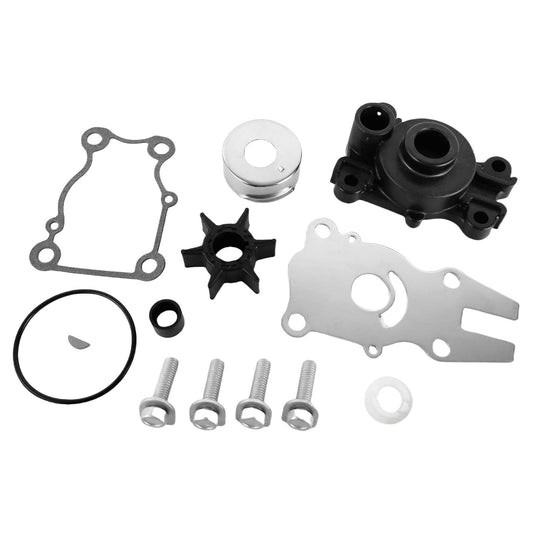
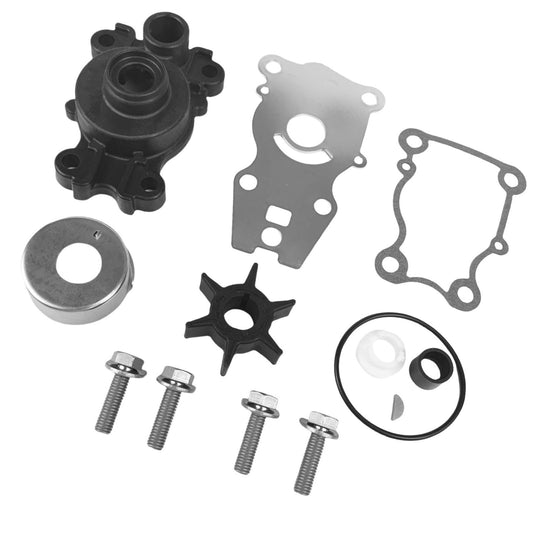
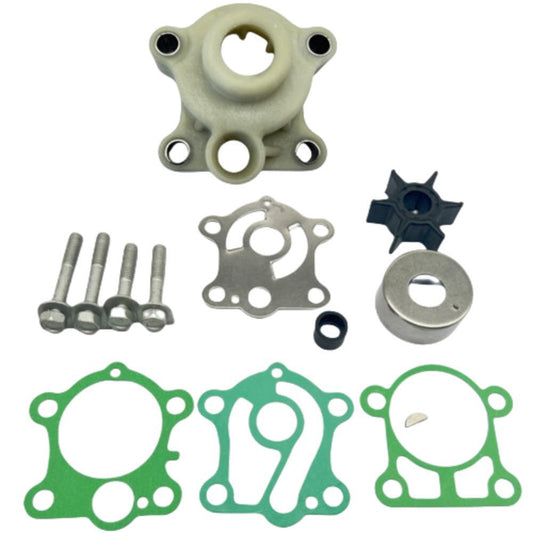
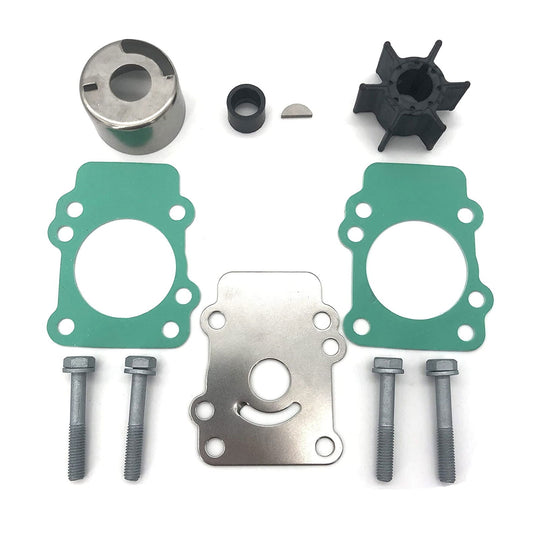
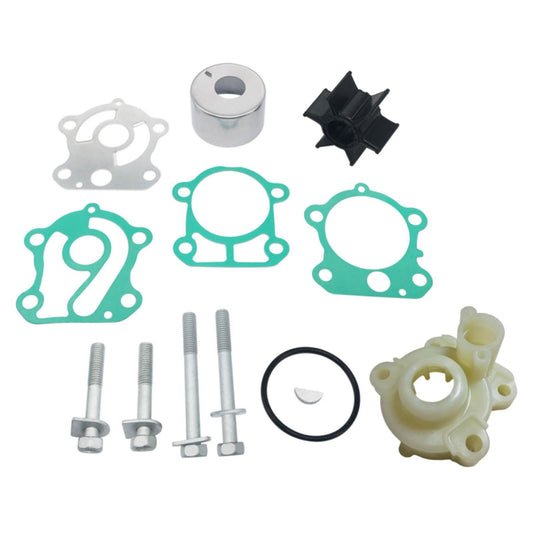
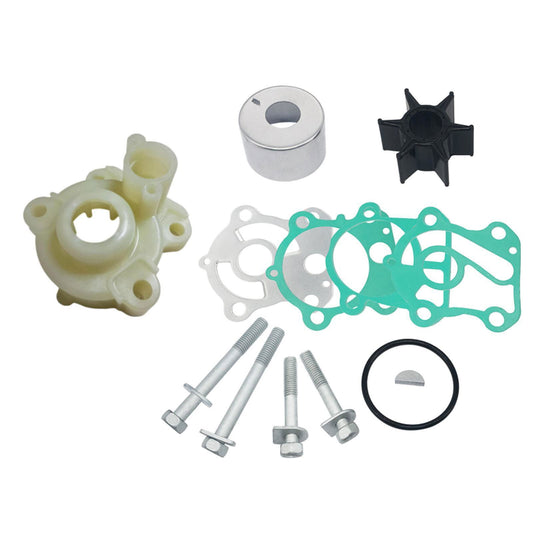
Water pump service is a perfect example. You can buy the impeller, wear plate, cup, and seals individually for about $85 in genuine parts. Or you can grab the complete kit (part #47-43026Q06) for $95 and get the drive pin, O-rings, and tube included. The kit saves you from a second order when you snap the pin during install—and you will snap it if the housing is corroded. Browse our selection of Mercury Water Pump Kits for original factory assemblies.
For gearcase seals, always buy the kit. Trying to piece it together means you'll forget the pinion shim, the prop shaft seal carrier, or the shift shaft bushing. Then you're waiting three days for backorder while the boat sits on the lift.
Identifying Missing or Damaged Serial Tags
If your serial tag is gone—corrosion, previous owner swapped powerheads, whatever—you can still ID the engine. Measure the bore and stroke with a caliper through the plug hole. Check the gearcase ratio stamp on the bullet nose. Count the splines on the crankshaft. Between those three data points and the cowl design, we can narrow it to a two-year window and cross-reference from there.
You can also email us photos: full cowl profile, clamp bracket, gearcase bullet, and any castings with date codes. We've ID'd enough engines to spot a 2003 vs. 2004 50hp EFI from the fuel rail bracket alone.
Critical vs. Non-Critical Components
For anything in the fuel system, ignition, or cooling loop, I only install genuine Mercury. Fuel pump diaphragms, VST screens, thermostats, impellers, shift shaft seals, stator coils—these aren't the place to gamble. A failed ignition coil leaves you drifting. A blown shift seal dumps your gear oil and grenades the pinion bearing.
Non-critical? Aftermarket is fine. Cowl latches, kill-switch lanyards, trim sender pigtails, flush adapters—buy whatever's cheap. It won't sink your boat.
The VesselView Diagnostic Advantage
If you're running a newer Merc with VesselView or SmartCraft, you can catch part failures early. The system logs fault codes for low fuel pressure, weak coil output, high coolant temp—stuff you won't notice until it's catastrophic. I've had guys come in because VesselView threw a P0172 (rich mixture) code. Pulled the fuel pressure log, saw it dropping from 55 PSI to 38 PSI under load. Swapped the OEM fuel pump before it died offshore. That's a $400 part vs. a $1,200 tow.
Warranty and Return Policy
Genuine Mercury parts carry a one-year warranty, processed through any authorized dealer in the US. If it fails, you're covered—parts and labor if it's defective. Aftermarket warranties vary. Sierra offers solid coverage, but you're filing the claim with whoever you bought from, not Mercury. If that vendor goes dark, you're stuck.
Using aftermarket direct-fit replacements won't void your engine warranty, but if the aftermarket part causes a failure, Mercury won't cover the collateral damage. That Verado thermostat case? Customer paid out of pocket because Mercury proved the aftermarket stat caused the overheat.
Shipping and Availability
We ship genuine Mercury parts globally, usually 5-15 days depending on location. Aftermarket is faster—Sierra and JLM Marine stock deeper and ship from multiple warehouses, so you're looking at 2-3 days domestic.
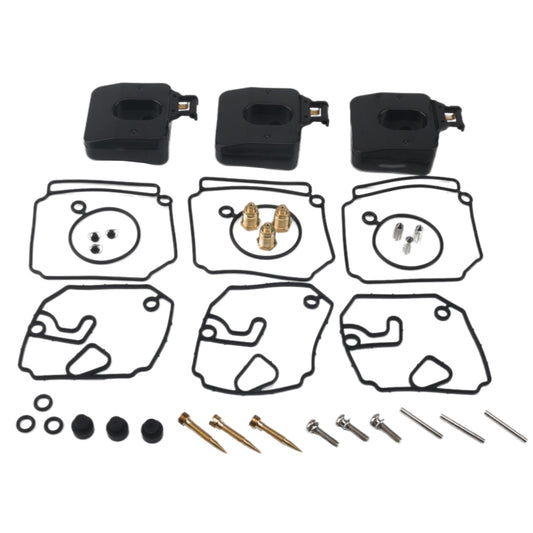
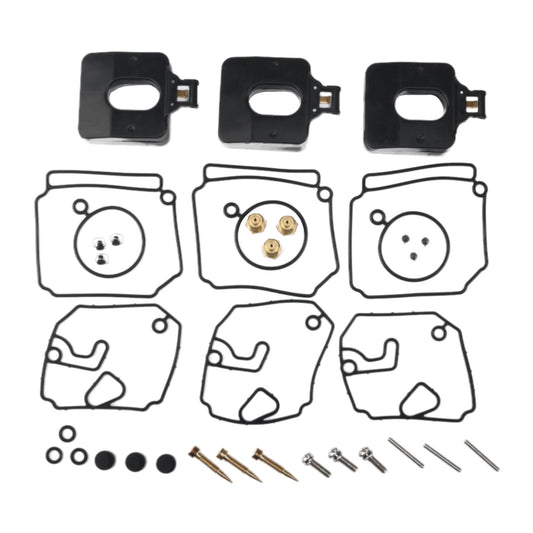
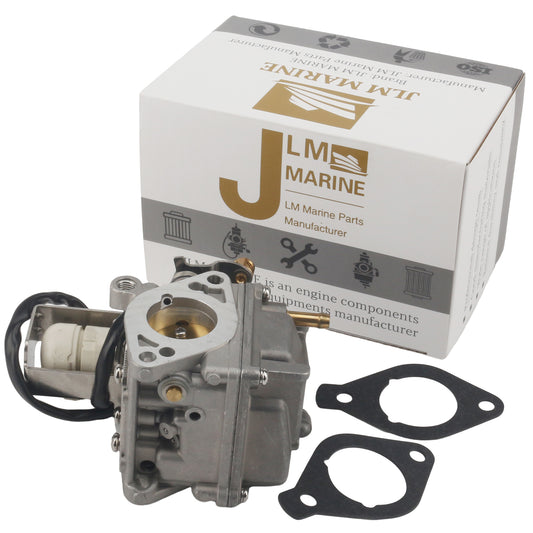
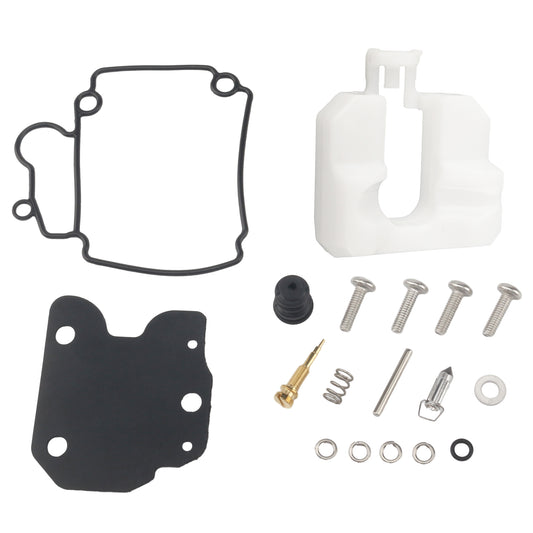
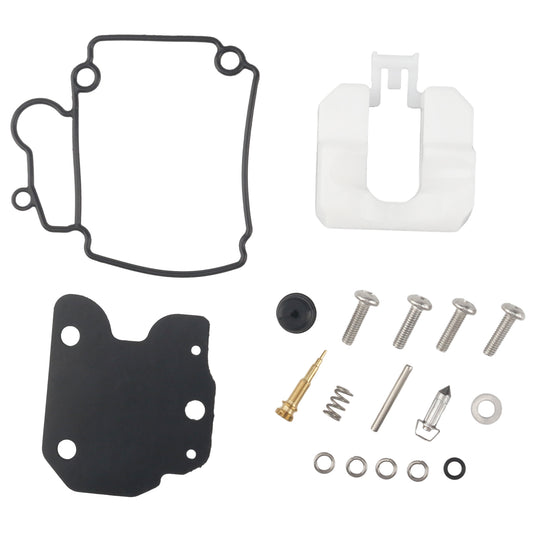
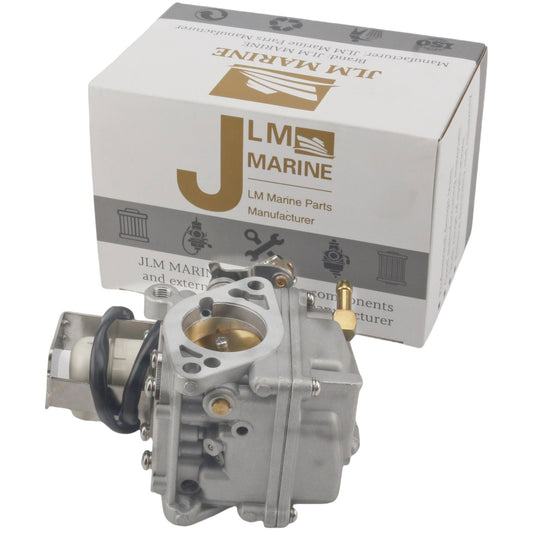
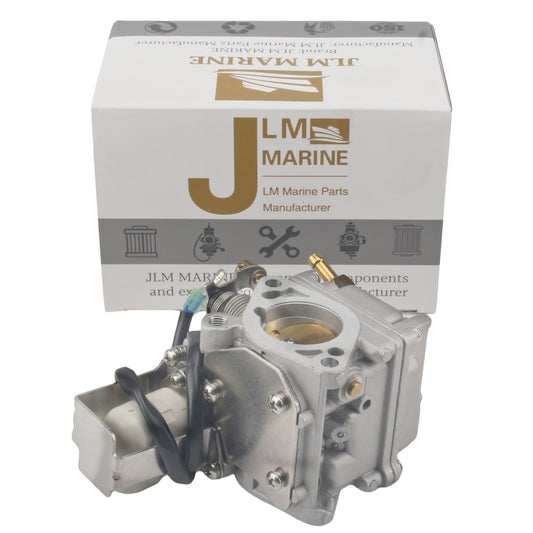
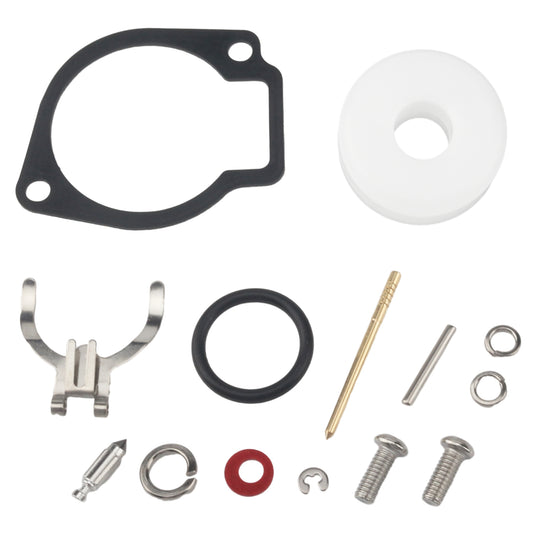
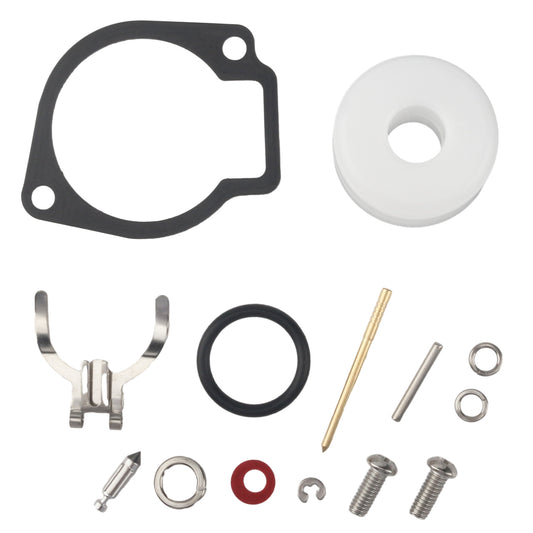
For older engines (pre-2000), OEM parts availability gets thin. Mercury discontinues slow-moving inventory. Aftermarket fills that gap. I've sourced NLA carb kits for 1980s Mercs from aftermarket suppliers when Mercury had nothing. It's a rebuild or nothing situation, so you take what you can get. Check our Mercury Carburetor collection for available OEM carburetors and kits.
Backorder Protocol
If a part's backordered, we pull allocation from Mercury's network—other dealers, regional warehouses. Average wait is 7-10 days. For critical stuff like a stator or ECM, we'll overnight from Wisconsin if it's in stock at Mercury's main depot. You pay the freight, but you're back on the water.
Maintenance Intervals Using OEM Parts
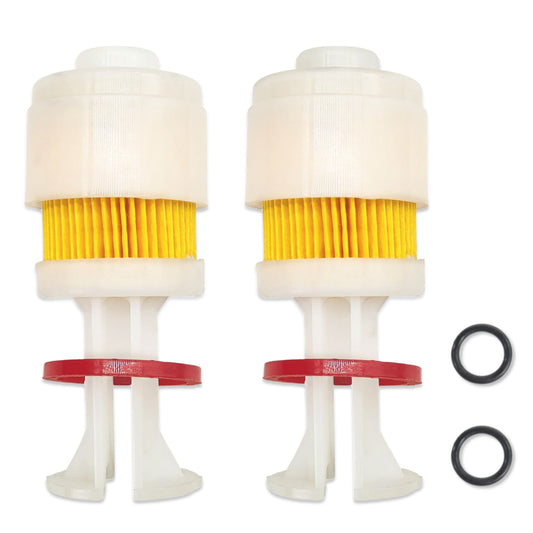
Mercury's factory service schedule ties directly to genuine parts. The 100-hour service calls for a new fuel filter (35-8M0020349), water pump impeller (47-89984T), and lower unit oil (92-858064K01 for most gearcases). If you're running aftermarket, the intervals might shift—cheaper impellers wear faster, so you're inspecting at 75 hours instead of 100. View our full range of Fuel Filters and Water Pump Impellers for OEM maintenance replacements.
Engine oil depends on your series. Verados take 25W-40 synthetic (92-858037K01). Optimax and older two-strokes run 10W-30 (92-858026K01). Using the wrong viscosity, even if it's "marine certified," throws off the oil pressure sensor calibration and can trigger false alarms on SmartCraft systems.
Which Lubricants Mercury Specifies
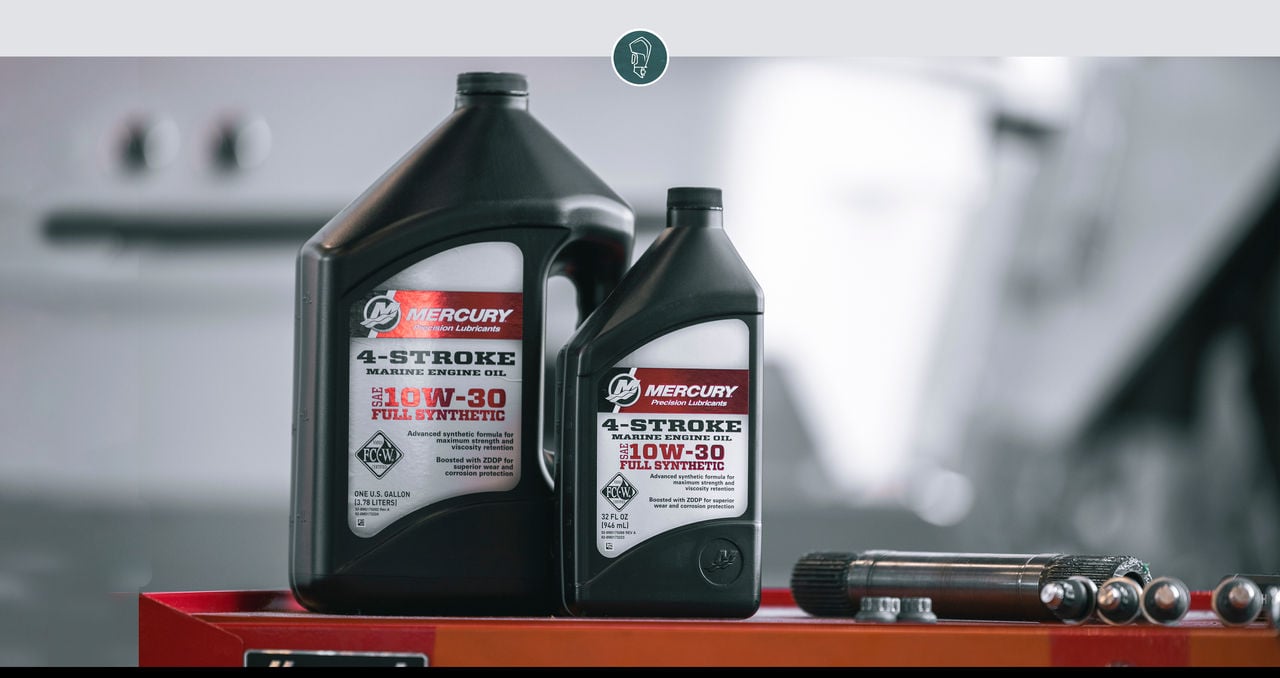
Mercury specs high-zinc 25W-40 for four-strokes because the flat-tappet camshafts need the anti-wear additives. Automotive oils dropped zinc to meet emissions, but marine engines still run old-school cam designs. If you dump AutoZone 25W-40 in a Verado, you'll wipe the cam lobes by 500 hours.
Gearcase oil is 90W premium blend (92-858064K01) or full synthetic (92-858064QB1) if you're in extreme cold. The synthetic flows at -15°F; the blend gets sluggish below 0°F. If you're running a big Mercury Racing sterndrive, they specify the synthetic exclusively—the gear load and heat demand it.
Finding the Right Part Without a Serial Number
If you're searching by model/year/HP, you'll get close, but Mercury split production mid-year on a lot of models. A 2012 90hp four-stroke came in both carbureted (imported) and EFI (domestic) versions. Different fuel systems, completely different parts catalogs. If you don't specify which, you'll order the wrong injector harness.
Best move: send us the model designation from the cowl decal (e.g., "90ELPT EFI") plus the HP and year. We cross-reference that with Mercury's production database and nail it down.
Tools You'll Need for DIY Installs

For a water pump swap, you need a 10mm socket for the lower unit bolts, a flat-blade to pry the old impeller, and needle-nose to pull the cup. Don't forget the gasket scraper—old gasket material left behind will cause a slow leak that'll overheat the engine in August when you're 10 miles out.
Gearcase seal jobs require a slide hammer for the input shaft bearing, a seal driver set, and a torque wrench for the pinion nut (45-50 ft-lbs spec). If you're pulling the prop shaft, heat the carrier with a torch to break the Loctite—don't hammer it or you'll crack the housing.
Common Misidentification Mistakes

Counter-rotation gearcases get ordered wrong constantly. A standard rotation 150hp uses part #1647-9523A30. Counter-rotation is #1647-9524A30. The internal gears are opposite-hand cut. If you bolt the wrong one on, the prop spins backward and you'll reverse into the dock at full throttle. Check the rotation decal on the cowl before you order.
Older Mercs (1990s) had mid-year changes where they switched from points ignition to CDI. The flywheel, stator, and trigger are all different. If you don't verify which version you have, you'll buy $600 worth of wrong parts.
JLM Marine's Position in the Market

We manufacture parts to OEM specs using the same suppliers that feed Mercury's lines. The difference? We sell direct, no dealership overhead. A Mercury impeller runs $55 retail. Ours is $32, same nitrile compound, same dimensional tolerance. The only thing missing is the Mercury logo on the bag.
For hard parts—pistons, rods, cranks—aftermarket often exceeds OEM. We include upgraded ring sets and better wrist pin coatings in our rebuild kits. Mercury's kits are fine, but they're designed to minimum spec. We design to last. Explore our full selection of Direct from Factory Boat Parts for high-quality OEM and aftermarket options.
Global Reach
We've shipped gearcase seal kits to Australia, ignition coils to New Zealand, power trim pumps to Norway. If you're outside the US and the local Mercury dealer wants $900 for a part we sell for $400, we'll get it to you in two weeks. Freight's usually $40-60 depending on weight.
What Mercury's Racing Division Changes
Mercury Racing stuff is a different animal. The throttle bodies, injectors, camshafts, and ECM maps are all specific to Racing models. You can't swap a standard Verado coil onto a 400R—the spark timing and dwell are different. Always verify you're ordering Racing-specific parts if you've got a 400R, 450R, or any sterndrive with the Racing badge.
Oil Analysis for Preventive Maintenance
If you want to catch problems early, send your engine oil and gearcase oil for analysis every 100 hours. Blackstone Labs will tell you if you've got bearing material (copper, aluminum) in the oil before the bearing actually fails. I've caught early piston wear from silicon contamination—turned out the guy's air filter was torn and sucking dust. $40 filter vs. $3,500 top-end rebuild.
After every ride, flush your engine with fresh water for five minutes at idle. Saltwater thermostats corrode from the inside when salt crystals dry and re-form on the valve seat—flushing dissolves them before they lock the stat closed. For more tips on preventing overheating and corrosion, visit our Cooling System parts collection.
Для владельцев подвесных моторов Yamaha:
Мы надеемся, что следующие ресурсы окажутся полезными для вас в обслуживании и ремонте ваших судовых двигателей:
-
Детали подвесных моторов Yamaha
- Водяной насос Ямаха
- Рабочее колесо водяного насоса Yamaha
- Комплект крыльчатки водяного насоса Yamaha
- Термостат Ямаха
- Карбюратор Ямаха
- Комплект для ремонта карбюратора Yamaha
- Топливный насос Ямаха
- Топливный фильтр Ямаха
- Топливная магистраль и соединитель Yamaha
- Топливная магистраль Yamaha
- Сальник Yamaha
- Прокладка Ямаха
- Переключатель зажигания Yamaha
- Комплект топливного насоса Yamaha
О компании JLM Marine
Основанная в 2002 году, компания JLM Marine зарекомендовала себя как специализированный производитель высококачественных морских деталей, базирующийся в Китае. Наша приверженность совершенству в производстве заслужила нам доверие ведущих мировых морских брендов.
Как прямой поставщик, мы обходим посредников, что позволяет нам предлагать конкурентоспособные цены без ущерба качеству. Такой подход не только поддерживает экономическую эффективность, но и гарантирует, что наши клиенты получают наилучшую ценность напрямую от источника.
Мы рады расширить свое присутствие через розничные каналы, предлагая наш опыт и приверженность качеству непосредственно владельцам и любителям лодок по всему миру.
Распродажа деталей Yamaha
- $55.50
- $55.50
- Unit price
- per
- $22.50
$32.00- $22.50
- Unit price
- per
- $24.00
$25.00- $24.00
- Unit price
- per

- $41.80
- $41.80
- Unit price
- per
- $34.20
- $34.20
- Unit price
- per
- $34.99
- $34.99
- Unit price
- per

- $73.50
$84.99- $73.50
- Unit price
- per

- $28.90
- $28.90
- Unit price
- per

- $38.50
- $38.50
- Unit price
- per
- $21.79
- $21.79
- Unit price
- per
- $40.00
$47.00- $40.00
- Unit price
- per
- $23.50
$23.00- $23.50
- Unit price
- per
- $69.99
$88.88- $69.99
- Unit price
- per

- $29.00
- $29.00
- Unit price
- per


- $56.20
$67.00- $56.20
- Unit price
- per
- $47.50
- $47.50
- Unit price
- per


- $89.50
$119.00- $89.50
- Unit price
- per

- $39.90
$40.00- $39.90
- Unit price
- per

- $51.40
$65.00- $51.40
- Unit price
- per
- $22.50
- $22.50
- Unit price
- per