

Comparing Outboard Warranties: What Each Brand Offers
- What the Major Brands Actually Cover
- Usage Type Changes Everything
- The Fine Print That Voids Coverage
- Why Maintenance Records Are Your Best Defense
- Transferability and Resale Value
- Matching Coverage to How You Actually Use the Boat
- Extended Warranty Plans: When They're Worth It
- Pre-Purchase Questions to Ask the Dealer
- What Happens When You File a Claim
- Corrosion Coverage and Saltwater Use
- OEM vs. Aftermarket Parts and Warranty Compliance
- Commercial vs. Recreational: Know Your Category
- The Second-Owner Experience
- What's Not Covered: The Common Exclusions
- Promotional Offers and Expiration Dates
- A Quick Word on Third-Party Warranties
- One More Thing on Fuel Stabilizers

Look, if you're shopping for an outboard, the warranty isn't just some paperwork to toss in a drawer. I've been wrenching on these motors for 20 years, and I've seen too many people get blindsided when a claim gets denied over something they didn't know was in the fine print. The sticker on the cowling might say the same horsepower, but what the manufacturer will actually cover when things go sideways? That varies a lot.
What the Major Brands Actually Cover
The big four—Yamaha, Mercury, Honda, and Suzuki—all play the warranty game differently. You're looking at base coverage that runs anywhere from 3 to 5 years for recreational use in the US, but the details matter more than the number.
Honda went aggressive with their "True 5" program. It's a straight 5-year limited warranty, non-declining, covering the powerhead, lower unit, and electrical. No games, no drop-off in what's covered in year four versus year one. It's also fully transferable, which helps resale value. The catch? Honda doesn't offer extended plans beyond that. Five years is what you get, and they're strict on the maintenance side—we've seen claims denied when service records had gaps, even with the full five-year promise.
Mercury starts you at 3 years standard, but they push their Mercury Product Protection hard. Right now they're running a "Get 7" promo—3 years limited plus 4 years of Gold coverage on 75-400hp models, running through March 2025. Smaller engines (2.5-60hp) get 5 years base. The Gold and Platinum extension plans are transferable and non-declining, which is a strong selling point if you're thinking resale down the road. We process a lot of Mercury claims at our service center, and they tend to move faster through approval than some others, but you still need your ducks in a row on maintenance logs.
Yamaha gives you 3 years standard on four-strokes, with their F350C getting 5. Where Yamaha shines is the Y.E.S. (Yamaha Extended Service) program, which can push you out to 6 years total with no deductible. It covers major components, labor, and even technician travel costs if you're stuck somewhere remote. It's transferable too. The base 3-year is solid, but in years 4 and 5 under some plans, parts coverage can decline—read the contract. Yamaha dealers tend to be responsive, but we've seen approval times drag out on cosmetic issues like gelcoat bubbles or minor corrosion that they argue isn't a defect.
Suzuki matches the 5-year standard for recreational pleasure use, dropping to just 1 year if you're running commercial. They've been running promotional extensions up to 7 years on select models, usually timed around boat show season. The terms are straightforward—stick to the maintenance schedule, use the right fuel, and you're covered. Suzuki's warranty language is less cluttered than some others, which makes it easier to know where you stand.
Tohatsu also offers a 5-year limited, which they bill as best-in-class for standard coverage on recreational engines. No extended plans that I've seen pushed, but the base is competitive.
Usage Type Changes Everything

Here's where a lot of folks trip up. That 5-year number? It's for recreational use only. The second you start running charters, rentals, or using the motor for any kind of commercial work, the warranty drops hard—usually down to 1-3 years depending on the brand. Racing voids almost everything immediately. If you're splitting time between weekend fishing and occasional paid guide trips, you need to call the manufacturer or your dealer and get clarity in writing, because "occasional" isn't defined anywhere in the standard contracts.
The Fine Print That Voids Coverage

We've seen claims denied for a handful of repeat offenders. These are the top three that cost people the most money:
Fuel issues. Lee Gordon from Yamaha's PR team called out misfuelling as one of the biggest warranty killers across the industry: "Consumers can use ethanol blends up to 10 percent, but once you go above that, it can cause serious damage to the engine, which could cause the warranty to become void." E15 or higher will wreck fuel injectors and lines through phase separation—basically, the ethanol pulls moisture, the fuel separates into layers, and the lower unit gets a slug of water and varnish instead of clean gas. Yamaha, Mercury, and Suzuki all have this cap. Stick to E10 or non-ethanol whenever possible, and if your fuel sits for more than a month, use a quality enzyme-based stabilizer like Star Tron. For reliable parts that meet factory standards, sourcing from trusted suppliers like JLM Marine's fuel components helps ensure warranty compliance.
Missing or incomplete service records. This is the one that makes me pull my hair out. A customer brings in a motor with a scored cylinder wall, clearly a defect, but their logbook shows oil changes stopping 18 months ago. The manufacturer's going to point to neglect, even if the failure isn't related. You need receipts with dates, engine hours, part numbers (especially OEM or quality aftermarket like JLM Marine), and the servicing dealer's stamp if it wasn't done in-house. Keep a folder in the boat. Scan them. I don't care how you do it, just do it.
Unauthorized repairs. If you or your buddy try to swap a powerhead gasket in the driveway and something goes wrong, the warranty's toast. Even diagnostic work has to go through an authorized tech if you want coverage intact. Some manufacturers will also flag ECU data—they log over-rev events, overheating incidents, and prolonged low-oil-pressure running. If the black box shows you ran it at 7000 RPM for ten minutes after the oil light came on, good luck with that claim.
Minor stuff that's often excluded: normal wear items (spark plugs, anodes, impellers), cosmetic corrosion on non-critical fasteners, and gelcoat finish issues unless they're tied to a structural defect.
Why Maintenance Records Are Your Best Defense

Having a warranty doesn't mean you can ignore the 20-hour and 100-hour service intervals. If anything, it makes them more critical. When a part fails and you file a claim, the manufacturer's first question is "why did this fail?" If your records show religious upkeep—oil and filter changes on schedule, lower unit fluid checks, water pump impeller replacements at 200-300 hours—it points to a defect. If the records are blank, they'll assume you beat it to death and deny the claim.
At our shop, we keep detailed logs of every service, noting part numbers for things like lower unit seals or thermostats. That paper trail has saved customers thousands when a warranty adjuster questions whether the failure was due to a bad part or poor maintenance. The adjuster sees "Impeller replaced at 220 hours with OEM Yamaha 6E5-44352-01" and moves on. No argument. For those performing their own maintenance, guides such as How to Replace a Mercury Outboard Water Pump Impeller can help ensure proper procedure and documentation.
Also, if you're doing your own 20-hour oil changes to save a few bucks, verify with your dealer that it won't void coverage—some brands require the first few services to be done by a certified tech. Get it in writing if they say it's fine.
Transferability and Resale Value
If you're thinking about selling the boat down the road, a transferable warranty is worth real money. Honda's 5-year and Mercury's extended plans are both fully transferable, and that's a strong negotiating point when a buyer's kicking tires. Yamaha's Y.E.S. transfers too, though the base 3-year is limited to the original owner unless extended.
There's usually a short window—sometimes just 30 days—for the new owner to register the transfer with the manufacturer after the sale. Miss that deadline and the coverage can lapse. Make sure the buyer knows this and budget time to handle the paperwork at closing.
Some extended plans also come with transfer fees, though they're typically under $100. Factor that into the sale price if you're the seller.
When considering purchasing used motors, be sure to verify transfer procedures by consulting Mercury Serial Number Guide, which helps identify model specifics relevant to warranties.
Matching Coverage to How You Actually Use the Boat
Picking the right warranty isn't about getting the longest number of years. It's about matching coverage to your habits and your tolerance for risk.
If you're a weekend angler putting 40 hours a year on a motor, the standard 3-5 year coverage is probably fine. You'll hit maybe 200 hours by the time the warranty expires, and most mechanical failures show up well before that if they're going to happen.
If you're running 200+ hours a season—guides, charter captains, or guys who fish tournaments every weekend—you're in a different category. The base recreational warranty still applies if you're not taking money for rides, but you're compressing years of wear into months. An extended plan like Mercury's Platinum or Yamaha's Y.E.S. starts to make financial sense because you're more likely to actually use it before the clock runs out. Just make sure your usage doesn't cross into "commercial" territory, or the whole thing's void.
Also, think about your mechanical skill level. If you're the type who likes to wrench and you're comfortable doing your own lower unit fluid swaps or thermostat replacements, confirm that DIY work won't kill the warranty. Some manufacturers are fine with it as long as you use OEM or equivalent spec parts and log it properly. Others want every fastener touched by a certified tech. Know which camp your brand falls into before you crack open the cowling. For parts, consider buying from a trusted supplier like JLM Marine to ensure quality and warranty compliance.
Extended Warranty Plans: When They're Worth It

Mercury's Product Protection and Yamaha's Y.E.S. are the two most common extended options we see. Mercury's Gold plan adds coverage for failure of major components—powerhead, lower unit, fuel system—and includes parts and labor at any authorized dealer nationwide. Platinum steps it up with coverage for smaller items and often lower deductibles. Both are non-declining, so year seven is covered the same as year one.
Yamaha's Y.E.S. similarly extends the factory warranty without declining coverage. It includes tech travel, which matters if you boat in remote areas where the nearest dealer is two hours away. No deductible is a nice touch—some third-party aftermarket plans nickel-and-dime you with $100-$250 deductibles per visit.
Honda doesn't push an in-house extended plan, which is interesting given their 5-year base. You can sometimes find third-party plans through dealers, but read those carefully—they're not factory-backed, and the quality of the underwriting company varies wildly. Some are solid; others are notorious for finding reasons to deny claims.
Suzuki offers dealer-arranged extensions during promotional periods. These are usually factory-backed, so they carry the same weight as the original warranty, but verify the terms because dealer add-ons can sometimes be third-party plans in disguise.
Pre-Purchase Questions to Ask the Dealer
When you're standing on the dealer's lot looking at a new motor, here's the checklist to run through before you sign anything:
- What is the exact warranty term for this specific model and serial number? (Don't assume; promotional terms vary by engine size and purchase date.)
- Is this coverage transferable, and what's the process and fee?
- What are the required service intervals, and do the first services have to be done by your shop?
- What documentation do I need to keep to ensure a claim isn't denied?
- Are there any current promotions extending the base warranty, and when do they expire?
- If I do my own oil changes using OEM-spec filters and fluids, does that void anything?
- What's the claims process if something fails—do I call you, or do I contact the manufacturer directly?
Get the answers in writing, especially on the DIY maintenance question. If the sales guy says "Yeah, you're fine to do your own oil," but the warranty doc says otherwise, you're stuck with what's in the contract.
What Happens When You File a Claim
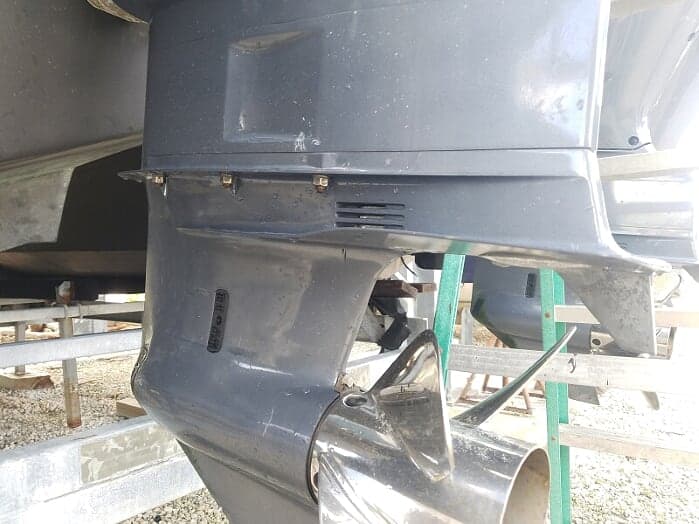
Let's say your lower unit starts whining at 150 hours, and you didn't hit anything. You pull it, and the pinion bearing is toast. Here's the process:
Shut it down immediately and document the issue. Take a video of the symptom—if it's a whine that changes with throttle, record it. Note the engine hours, the conditions (load, RPM, water temp), and when it started. Do not attempt to fix it yourself.
Contact your dealer, not the manufacturer. The dealer files the claim and acts as the middleman. They'll want to inspect the lower unit and often tear it down to identify the exact failure. If it's a defective bearing, they'll photograph it, note the part number, and submit the claim along with your service records.
Approval times vary. We've seen Mercury claims come back in a week, and Yamaha claims drag out three weeks for more complex failures. Honda tends to be slow but thorough. The dealer will either get a green light to proceed with the repair or a request for more information. If the manufacturer sees anything in your records—or lack of records—that suggests neglect, they'll deny it. That's why the logbook matters.
Once approved, the dealer orders parts (covered under warranty) and does the labor (also covered). You pay nothing if it's a clean claim. If it's a partial denial—say, they'll cover the bearing but not the seal because that's a wear item—you'll get a bill for the difference.
Corrosion Coverage and Saltwater Use
Most warranties include corrosion coverage that matches the mechanical term—3 years for Mercury, 5 for Honda, etc. But read the exclusions. Surface rust on stainless fasteners or discoloration on the lower unit skeg often isn't covered. Structural corrosion of the powerhead block or significant pitting of the lower unit housing usually is, but you'll need to prove it wasn't due to lack of flushing.
If you run in saltwater, flushing the engine with fresh water after every trip isn't optional. It's the single easiest thing you can do to prevent corrosion and keep the warranty valid. We tell customers to run the flush for at least ten minutes, long enough to get the internal passages clean. A quick 30-second rinse doesn't cut it.
Saltwater also accelerates anode wear. Check your trim tab and gear housing anodes every 50 hours and replace them when they're down to half thickness. A worn anode means the corrosion is attacking the aluminum instead, and that's not covered if the manufacturer sees you ignored basic maintenance.
For tips on saltwater care and overheating prevention, see our guide on Saltwater Use and Overheating: Prevention Tips.
OEM vs. Aftermarket Parts and Warranty Compliance
Here's a common question: if I use aftermarket parts during maintenance, does that void my warranty?
The short answer is no, as long as the parts meet OEM specifications. The Magnuson-Moss Warranty Act prevents manufacturers from requiring you to use only their branded parts unless they provide them for free. So if you're putting in an aftermarket water pump impeller that matches the OEM spec, and it fails and causes damage, the manufacturer has to prove the aftermarket part caused the failure—not just assume it.
That said, cheap garbage parts are a problem. A $10 impeller kit from a random online seller with no quality control will cause issues. The rubber's too hard, the vanes are too short, and it disintegrates after 20 hours. Then you've got a scored liner and an overheating powerhead, and good luck convincing the warranty adjuster that wasn't your fault.
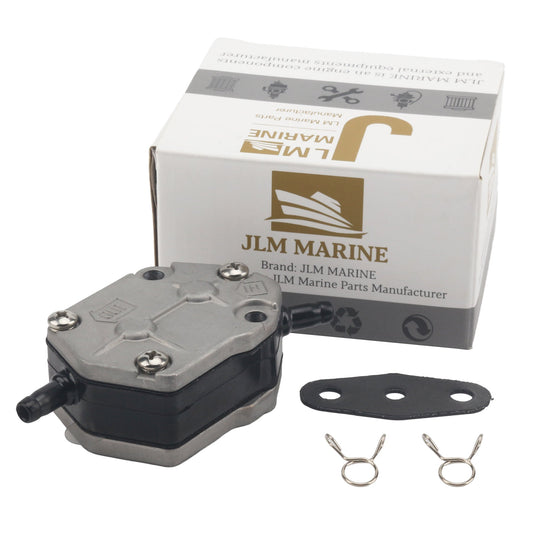
This is why we like parts from manufacturers like JLM Marine. They produce components that meet or exceed OEM specs, often in the same factories that supply the OEM brands. You get the fit and durability of OEM without the dealership markup. It fits right, it lasts, and it doesn't give the manufacturer an excuse to deny a claim.
For critical components—powerhead gaskets, lower unit seals, fuel injectors—use OEM or verified high-quality aftermarket. For consumables like impellers, anodes, or filters, quality aftermarket is fine as long as you verify the specs match.
Always log the part number in your service records. If you replaced the impeller with a JLM part number 18-3069, write it down. That shows you used a quality component that meets the manufacturer's spec.
Commercial vs. Recreational: Know Your Category

This trips up more people than you'd think. "Recreational" means you're using the boat for your own pleasure—fishing, cruising, watersports. The second you take money for a trip, even if it's a buddy slipping you $50 for gas, some manufacturers consider that commercial use.
Commercial warranties are usually 1 year, sometimes stretched to 2-3 for specific models. The distinction matters because if you file a claim and the manufacturer finds evidence of commercial use—social media posts advertising fishing charters, or a USCG inspection sticker—they'll retroactively reclassify your motor and deny the claim.
If you're even occasionally running paying passengers, call the manufacturer and ask for the commercial warranty terms in writing. It's better to know upfront that you've got 1 year of coverage than to assume you've got 5 and get burned later.
Racing voids everything across the board. Even endurance runs or poker runs can be gray areas. If you're running wide-open throttle for extended periods in any kind of timed or competitive event, and the motor grenades, expect a fight.
The Second-Owner Experience
If you're buying a used boat with an outboard still under warranty, verify the transfer process immediately. Contact the dealer or manufacturer with the serial number and ask:
- How much time is left on the original warranty?
- Is it transferable, and what's the fee?
- What's the deadline to complete the transfer?
- Does the coverage change after transfer (e.g., does it become deductible-based)?
Some brands, like Mercury with their extended plans, keep the same terms after transfer. Others revert to a limited version of the original warranty. Honda's 5-year stays intact if transferred within the window.
You'll also need the original purchase documentation and all service records from the previous owner. If those are missing, the manufacturer may not honor the transfer. Walk away from a "great deal" on a used motor if the seller can't produce a service history. You're buying a potential headache.
For more insights on identifying motor history, see our Mercury Serial Number Guide.
What's Not Covered: The Common Exclusions
Beyond the big three (fuel, maintenance, unauthorized repairs), here are the exclusions we see trip people up:
Trailer damage. If the motor gets cracked during trailering because the support bracket broke, that's on you. Towing and storage damage isn't covered.
Propeller and skeg damage from impacts. Hit a stump and bend the prop shaft? Not covered. Gouge the skeg on a rock? Not covered. Impact damage is almost always excluded unless you can prove a manufacturing defect caused the impact (like a casting flaw in the lower unit that caused it to crack).
Paint and cosmetic finish. Fading, chalking, or minor scratches on the cowling aren't covered. Structural issues with the cowling—like a crack from a defect—usually are, but expect a fight if it's borderline.
Damage from water intrusion due to improper storage. If you store the motor without draining the cooling system and it freezes and cracks the block, that's on you.
Modifications. Any non-approved modification—aftermarket ECU tuning, high-flow exhaust kits, performance impellers—can void the entire warranty. If you want to tinker, wait until the warranty expires.
Promotional Offers and Expiration Dates
Mercury's "Get 7" and Suzuki's 7-year promotional warranties are great, but they're time-sensitive. Mercury's current offer runs through March 2025 for 75-400hp models. After that, you're back to the 3-year base unless they roll out a new promo.
Dealers sometimes push these hard at the end of a model year to clear inventory. That's fine, but verify the offer applies to the specific motor you're looking at and that the registration deadline isn't already past. We've seen situations where a dealer sold a motor in April but the promo ended in March, and the buyer assumed they had 7 years when they really had 3.
Always ask for the promotional terms in writing and confirm the registration process with the manufacturer directly.
A Quick Word on Third-Party Warranties
Some dealers offer third-party extended warranties through companies that aren't the manufacturer. These can be good or terrible, depending on the underwriter.
The good ones—backed by established marine insurance companies—offer broad coverage, low deductibles, and fast claims. The bad ones are packed with exclusions, high deductibles, and slow-pay tactics. They'll find a reason to deny or delay every claim.
Before you buy a third-party plan, research the underwriter. Look for reviews from other boat owners and check the Better Business Bureau. If you can't find anything about them, or if the reviews are full of denied claims, walk away. Stick with factory-backed extensions from Mercury, Yamaha, or Suzuki, where the manufacturer's reputation is on the line.
One More Thing on Fuel Stabilizers
Since fuel problems are such a common warranty killer, spend the $15 on a quality stabilizer. Enzyme-based treatments like Star Tron or Sea Foam break down water and prevent phase separation in ethanol blends. If your boat sits for more than a month between trips—and most do during the offseason—add stabilizer to every fill-up.
Also, keep your fuel fresh. Don't let gas sit in the tank for six months. If you're winterizing, either run the tank dry or fill it completely with treated fuel to minimize condensation. Water in the fuel system will corrode injectors and clog filters, and that's the kind of damage that makes warranty adjusters start asking questions about your maintenance habits.
Pro tip: After every ride, flush your engine with fresh water for at least ten minutes. If you're in saltwater, make it fifteen. This prevents salt buildup in the cooling passages and keeps your water pump impeller from seizing, which is a common failure point that's easy to avoid.
For premium OEM and aftermarket marine engine parts to keep your motor running right, check out JLM Marine's full parts selection.
For more on marine parts and boating essentials, visit the JLM Marine home page.
Hi—I’m Jim Walker
I grew up in a Florida boatyard, earning pocket money (and a few scars) by rebuilding outboard carbs before I could drive. That hands-on habit carried me through a Ph.D. in mechanical engineering, where I studied how salt water quietly murders metal.
I spent ten years designing cooling systems for high-horsepower outboards, then joined JLM Marine as CTO. We bench-test every new part in the lab, but I still bolt early prototypes onto my own 23-foot skiff for a weekend shake-down— nothing beats real wake and spray for finding weak spots.
Here on the blog I share the fixes and shortcuts I’ve learned so your engine—and your day on the water—run smooth.

Для владельцев лодок:
Мы надеемся, что следующие ресурсы окажутся полезными для вас в обслуживании и ремонте ваших судовых двигателей:
- Руководство по серийным номерам Mercury
- Руководства пользователя от Mercury
- Официальное руководство по номерам моделей в формате PDF от BRP
- Руководство по серийным номерам Johnson
-
Аксессуары для лодок от JLM Marine
О компании JLM Marine
Основанная в 2002 году, компания JLM Marine зарекомендовала себя как специализированный производитель высококачественных морских деталей, базирующийся в Китае. Наша приверженность совершенству в производстве заслужила нам доверие ведущих мировых морских брендов.
Как прямой поставщик, мы обходим посредников, что позволяет нам предлагать конкурентоспособные цены без ущерба качеству. Такой подход не только поддерживает экономическую эффективность, но и гарантирует, что наши клиенты получают наилучшую ценность напрямую от источника.
Мы рады расширить свое присутствие через розничные каналы, предлагая наш опыт и приверженность качеству непосредственно владельцам и любителям лодок по всему миру.
Распродажа лодочных аксессуаров
- $54.00
- $54.00
- Unit price
- per
- $38.50
- $38.50
- Unit price
- per
- From $39.13
$45.50- From $39.13
- Unit price
- per
- $53.50
- $53.50
- Unit price
- per
- From $54.00
- From $54.00
- Unit price
- per


- $34.50
- $34.50
- Unit price
- per
- $34.50
- $34.50
- Unit price
- per
- $54.00
- $54.00
- Unit price
- per
- $54.00
- $54.00
- Unit price
- per
- $32.00
- $32.00
- Unit price
- per
- $23.50
- $23.50
- Unit price
- per
-
Red
-
Blue
- $45.00
- $45.00
- Unit price
- per
- $40.00
- $40.00
- Unit price
- per
- $22.80
- $22.80
- Unit price
- per
-
Red
-
Blue

- $31.50
- $31.50
- Unit price
- per
- $22.80
- $22.80
- Unit price
- per
-
Red
-
Blue
- $54.00
- $54.00
- Unit price
- per


- $59.00
- $59.00
- Unit price
- per

- $22.80
$27.00- $22.80
- Unit price
- per

- $32.00
- $32.00
- Unit price
- per