

Best Outboard Engines for Fishing Boats: Brand Comparison
- Yamaha Outboards: Reliability Standard for Offshore Fishing
- Mercury Outboards: Performance Leader with Broad HP Range
- Suzuki Outboards: Best Fuel Economy for Long-Range Fishing
- Honda Outboards: Smoothest Operation for Trolling and Heavy Loads
- Evinrude and Johnson: Legacy Two-Strokes with Parts Challenges
- Tohatsu Outboards: Value Pick for Small Fishing Boats and Kickers
- Force and Mariner: Budget Options with Major Caveats
- Brand Comparison for Fishing Applications
- What You Need to Know Before Buying
- Decision Checklist

After two decades wrenching on outboards, I've rebuilt enough powerheads to know which brands actually hold up and which ones show up on the shop lift every season. Mercury and Yamaha dominate the US market at roughly 37% share each for good reason, but Suzuki and Honda deserve serious consideration depending on your fishing style. Here's what actually matters when you're choosing an engine.
Yamaha Outboards: Reliability Standard for Offshore Fishing
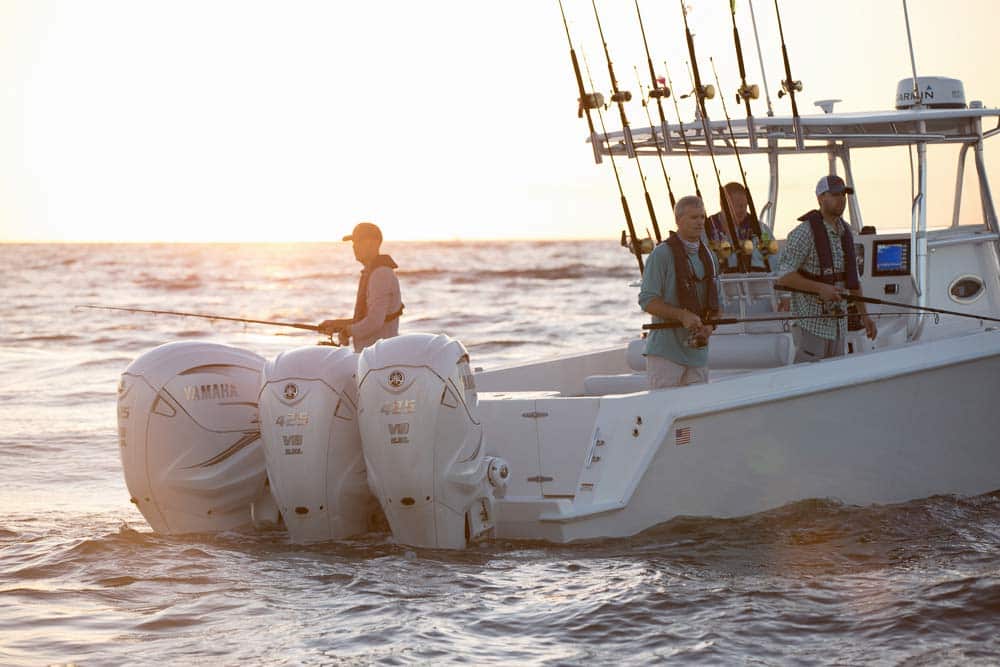
Yamaha engines earn their reputation through simple durability. Commercial fisherman Chris Cokinos runs a 1995 Yamaha 150 two-stroke with over 4,400 hours fishing offshore daily for black seabass and tuna—25 miles out, 8-9 hours on the water, no major failures. That's not a fluke. We service mainly Yamahas at our shop, and engines routinely hit 3,000+ hours before needing serious work.
What Makes Yamaha Last
The four-stroke designs focus on low-end torque, which gets a loaded fishing boat on plane without lugging the engine. Their corrosion-resistant alloy (YDC-30) outlasts many competitors in saltwater—we see fewer corroded lower units on Yamahas than other brands at the same age. The fuel injection systems deliver decent economy, though Suzuki beats them here.
Yamaha covers engines with a 3-year limited warranty. Models like the F150 dominate the 19-24 ft center console market because parts availability is excellent nationwide and resale value stays strong. If you're running offshore or need a proven workhorse, Yamaha's your baseline. For genuine parts that keep your Yamaha running optimally, explore our Yamaha outboard motor parts collection.
Common issue we diagnose: On older F150s, check the internal balancer assembly every 500 hours. Neglect it and you risk block damage that'll cost more than the boat.
Mercury Outboards: Performance Leader with Broad HP Range
Mercury holds the largest US market share and builds engines for anglers who prioritize power and throttle response. We've seen their FourStroke, Pro XS, Verado, and Racing lines dominate bass boats and high-performance center consoles. If you're covering water fast or running heavy offshore rigs, Mercury's where most guys land.
Mercury Technology That Matters
Digital Throttle & Shift (DTS) gives you precise control—critical when you're holding position in current or navigating tight channels. The difference between a DTS-equipped Mercury and a mechanical-shift competitor is noticeable the first time you dock in wind.
Their Advanced MidSection design handles torque well on big twin or triple setups. Capt. Steven Lamp tested a Mercury 150 four-stroke on a 3,600 lb Wellcraft and found it outperformed a Yamaha 200 in both speed and fuel economy on the same hull—quieter than the older OptiMax models, too.
Mercury backs engines with a 3-year non-declining warranty, meaning labor rates stay fully covered in year three, not just parts. They use XK360 alloy for corrosion resistance, though we still see more lower unit service on Mercs than Yamahas in heavy saltwater use. To maintain peak performance, check out our Mercury outboard motor parts collection for genuine replacement parts.
Frequent repair: Lift pump diaphragm failures on older models cause rough idle and fuel starvation at throttle. Symptoms show as stumbling acceleration before the engine catches and runs clean.
Suzuki Outboards: Best Fuel Economy for Long-Range Fishing

Suzuki wins on fuel efficiency, and for anglers logging serious trolling hours or making long runs, that adds up. Their Lean Burn Control system optimizes the air-fuel mixture at cruise, improving economy by roughly 15% over competitors in the same HP class. Commercial fisherman Jeff Bassett in Kodiak runs a Suzuki DF140 commercially, burning under $2,000 fuel per season and getting 10-year lifespans under hard use.
Suzuki Engineering Details
The self-adjusting timing chains eliminate the maintenance headache of timing belts—no replacement intervals, just check tension during routine service. We appreciate this on engines operating in remote areas where downtime costs money.
Suzuki's corrosion protection is strong, though not quite Yamaha-level. The engines run noticeably quieter than most Mercurys, which matters if you're sneaking up on spooky inshore fish. They also tend to cost less upfront than equivalent Yamaha or Mercury models, making them a smart pick for budget-conscious offshore and inshore setups. For authentic parts designed to keep your Suzuki running efficiently, browse our Suzuki outboard motor parts collection.
Suzuki provides a 3-year warranty. The DF300 and DF350 are popular on 25-ft-plus offshore boats where fuel costs matter.
Maintenance advantage: Oil-bathed timing chains mean you skip the 1,000-hour timing belt service that hits some competitors. Service intervals stay simple—oil, filters, plugs, water pump.
Honda Outboards: Smoothest Operation for Trolling and Heavy Loads
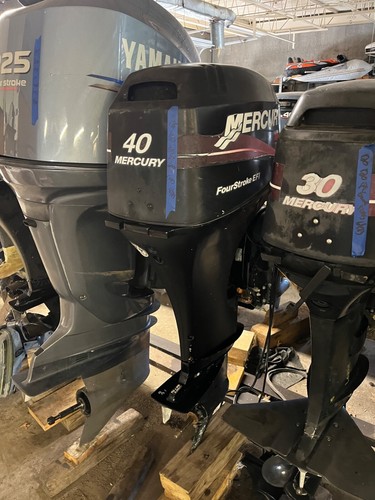
Honda builds outboards the same way they build cars—over-engineered and nearly bulletproof. One owner ran a 1998 Honda 40 HP four-stroke for 20 years and over 8,000 miles, needing only routine water pump changes and averaging 7 MPG. Trolling uses 1-2 gallons daily. That's exceptional for a 40.
Honda's Strengths
The low-end torque is perfect for heavier fishing boats and precise trolling speeds. Honda's VTEC technology (on select models) adjusts valve timing for better fuel economy at cruise without sacrificing top-end power—smart engineering that other brands are only now catching up to.
They run whisper-quiet compared to competitors, which helps when you're approaching shallow flats or working spooky fish. The jet models like the Honda Jet 105 handle shallow water well for inshore applications.
Honda's challenge is a smaller lineup than Mercury or Yamaha. You get fewer HP options above 250, which limits choices for big offshore center consoles. Dealer network is also thinner in some regions, though parts quality is top-tier. For quality genuine parts supporting Honda maintenance and repairs, visit our Honda outboard motor parts collection.
Why we like Honda for DIYers: Accessible oil filters and simple maintenance layout. If you're doing your own service, Honda makes it easier than most brands.
Evinrude and Johnson: Legacy Two-Strokes with Parts Challenges
BRP discontinued Evinrude in 2020, so these engines represent a specific market: used repowers and older boats. The E-TEC Direct Injection technology was a genuine improvement over carbureted two-strokes—better throttle response, cleaner burn, less smoke, and improved fuel economy.
The Evinrude Reality Now
E-TEC G2 models (2015+) have better parts support than earlier G1 or HPDI engines. However, the dealer network collapsed after discontinuation. We can still source parts—sent a kit to Australia last week for an early 2000s HPDI—but it takes effort and knowledge. For Evinrude components that keep your legacy outboard on the water, check our specialized Evinrude outboard motor parts collection.
If you're considering a used Evinrude, budget for parts sourcing challenges. Find a mechanic familiar with E-TEC systems before you buy, because dealer support is gone. For someone wanting guaranteed long-term factory backing and easy parts access, this isn't the move in 2024.
Fair assessment: Two-stroke power-to-weight ratio is excellent, and E-TEC fuel economy rivals four-strokes in some tests. But you're betting on your ability to keep an orphaned platform running.
Tohatsu Outboards: Value Pick for Small Fishing Boats and Kickers
Tohatsu builds solid, no-frills engines popular in the lower to mid-HP range. They're common as auxiliary "kicker" motors for trolling and as primary power on small aluminum fishing boats and jon boats. We see them hold up well in freshwater and light saltwater use.
Tohatsu's Position
They offer good value—lower purchase price than Yamaha or Mercury for comparable HP. The engines are straightforward to service, with accessible maintenance points. However, dealer support is thinner than the big brands, especially outside major metro areas.
For a DIYer comfortable sourcing parts and doing your own work, Tohatsu is a smart way to save money. We help customers find parts for less-common models regularly through our Tohatsu outboard motor parts collection. But if you want to walk into any coastal marina and get same-day service, you'll have better luck with Yamaha or Mercury.
Force and Mariner: Budget Options with Major Caveats
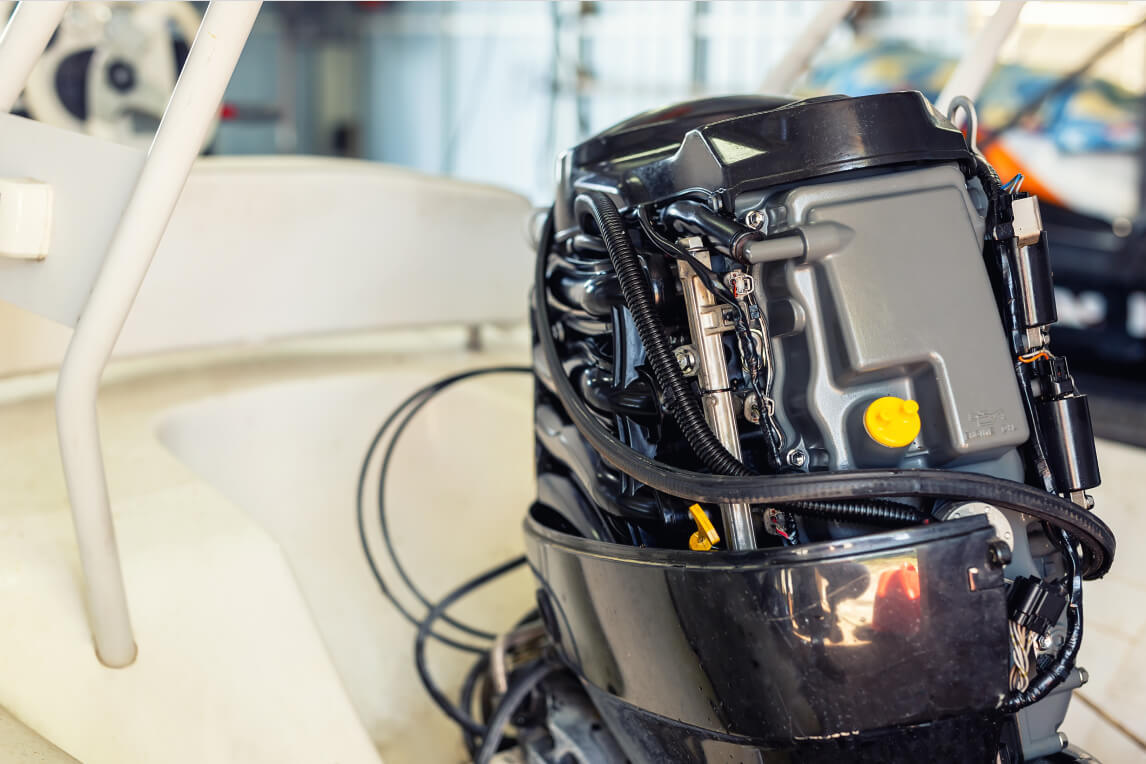
Force is defunct (Mercury discontinued the brand decades ago), and Mariner engines are rebadged Mercurys or Yamahas depending on era. You find these on older boats or as cheap used options.
Real talk: Parts for Force engines are tough. We've sourced them, but it requires hunting. Unless you're getting a Force nearly free and plan to DIY everything, skip it. Mariner can be fine if you identify which Mercury or Yamaha model it's based on—then you just cross-reference parts. For genuine parts related to Mercury or Yamaha, check our respective parts collections linked above. But for a primary fishing engine you're counting on, stick with a current brand that has factory support.
Brand Comparison for Fishing Applications
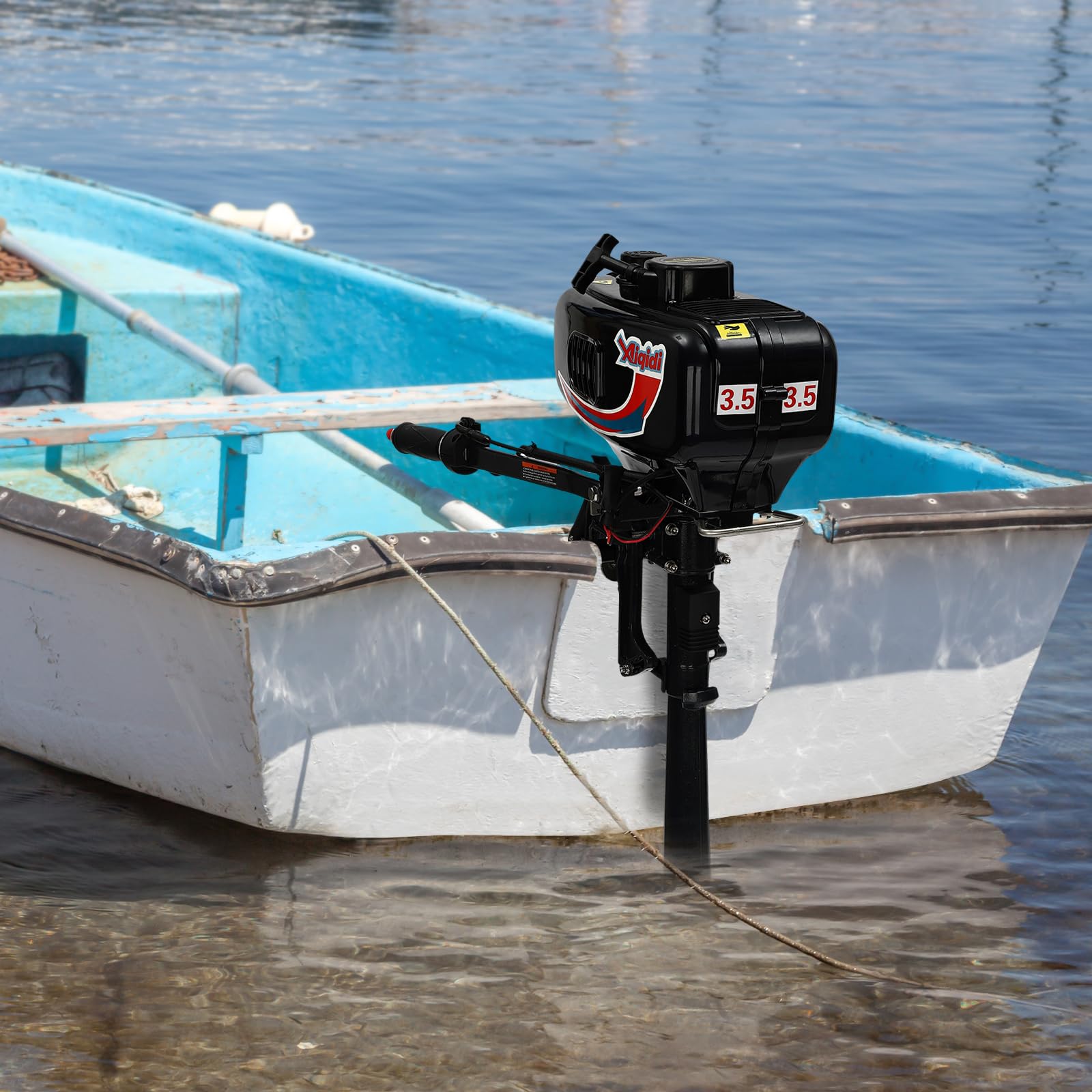
Inshore Fishing (40-90 HP)
Best choice: Suzuki DF70A or Yamaha F90 for fuel efficiency and reliability. Honda BF60 if you prioritize quiet operation for shallow flats. Mercury FourStroke 75 if you want more aggressive hole shot on a flats boat.
Offshore Fishing (150 HP+)
Best choice: Yamaha F150 for proven offshore durability. Mercury Verado 300 for twin or triple setups on 25-ft+ center consoles needing power. Suzuki DF300 if fuel costs are a major concern on long runs.
Trolling and Precision Control
Best choice: Honda for smooth low-speed torque. Yamaha F150 for all-around capability. Avoid older two-strokes unless you're dedicated to maintaining them.
What You Need to Know Before Buying
Rigging Compatibility
Switching brands often means new controls and gauges. Going from Evinrude to Mercury requires different rigging—controls, steering cables, and instrument harness rarely cross over. Budget an extra $1,500-3,000 for rigging if you're changing brands on a repower.
Maintenance Cost Reality
Suzuki's accessible oil filters and simple timing chain design keep routine service costs low. Mercury's DTS system adds initial cost but reduces long-term shift cable wear. Yamaha's parts are widely available but sometimes pricier than Suzuki equivalents for the same function.
Local Dealer Support
Check how many certified techs are within 50 miles of your home port before you buy. Yamaha and Mercury have the densest networks. Suzuki and Honda are strong in most coastal areas. Tohatsu requires more hunting.
Decision Checklist
- Determine local dealer support for warranty and emergency repairs
- Match HP to your hull's upper 75% rated range for best efficiency
- Calculate fuel costs over 5 years if you run 100+ hours annually—Suzuki's efficiency pays off
- Verify transom weight limits, especially for larger four-strokes
- Budget for rigging changes if switching brands
Daily maintenance tip: After every saltwater trip, flush your engine with fresh water for at least 10 minutes. Use the flush port, not just muffs—internal corrosion is what kills these engines early, not external wear. For additional advice on maintaining your engine's cooling system, see our guide on Outboard Overheating Prevention Tips.
For your outboard motor parts needs, no matter the brand, JLM Marine offers a wide range of genuine components in our marine parts hub, ensuring quality and fast shipping worldwide.
Hi—I’m Jim Walker
I grew up in a Florida boatyard, earning pocket money (and a few scars) by rebuilding outboard carbs before I could drive. That hands-on habit carried me through a Ph.D. in mechanical engineering, where I studied how salt water quietly murders metal.
I spent ten years designing cooling systems for high-horsepower outboards, then joined JLM Marine as CTO. We bench-test every new part in the lab, but I still bolt early prototypes onto my own 23-foot skiff for a weekend shake-down— nothing beats real wake and spray for finding weak spots.
Here on the blog I share the fixes and shortcuts I’ve learned so your engine—and your day on the water—run smooth.

Для владельцев лодок:
Мы надеемся, что следующие ресурсы окажутся полезными для вас в обслуживании и ремонте ваших судовых двигателей:
- Руководство по серийным номерам Mercury
- Руководства пользователя от Mercury
- Официальное руководство по номерам моделей в формате PDF от BRP
- Руководство по серийным номерам Johnson
-
Аксессуары для лодок от JLM Marine
О компании JLM Marine
Основанная в 2002 году, компания JLM Marine зарекомендовала себя как специализированный производитель высококачественных морских деталей, базирующийся в Китае. Наша приверженность совершенству в производстве заслужила нам доверие ведущих мировых морских брендов.
Как прямой поставщик, мы обходим посредников, что позволяет нам предлагать конкурентоспособные цены без ущерба качеству. Такой подход не только поддерживает экономическую эффективность, но и гарантирует, что наши клиенты получают наилучшую ценность напрямую от источника.
Мы рады расширить свое присутствие через розничные каналы, предлагая наш опыт и приверженность качеству непосредственно владельцам и любителям лодок по всему миру.
Распродажа лодочных аксессуаров
- $54.00
- $54.00
- Unit price
- per
- $38.50
- $38.50
- Unit price
- per
- From $39.13
$45.50- From $39.13
- Unit price
- per
- $53.50
- $53.50
- Unit price
- per
- From $54.00
- From $54.00
- Unit price
- per
- $34.50
- $34.50
- Unit price
- per

- $34.50
- $34.50
- Unit price
- per
- $54.00
- $54.00
- Unit price
- per
- $54.00
- $54.00
- Unit price
- per
- $32.00
- $32.00
- Unit price
- per
- $23.50
- $23.50
- Unit price
- per
-
Red
-
Blue
- $45.00
- $45.00
- Unit price
- per
- $40.00
- $40.00
- Unit price
- per
- $22.80
- $22.80
- Unit price
- per
-
Red
-
Blue

- $31.50
- $31.50
- Unit price
- per
- $22.80
- $22.80
- Unit price
- per
-
Red
-
Blue


- $59.00
- $59.00
- Unit price
- per
- $54.00
- $54.00
- Unit price
- per

- $22.80
$27.00- $22.80
- Unit price
- per

- $32.00
- $32.00
- Unit price
- per