


Johnson 70HP No Spark? Diagnosing Stator & Flywheel Rubbing on Outboard Motors
- Understanding No Spark Issues: The Heart of Your Johnson 70HP's Problems
- Critical Components in the Johnson 70HP Ignition System
- Step-by-Step Troubleshooting Guide With Factory Specifications
- Additional Issues After Ignition Repairs
- Recommended Quality Parts and Reliable Sources
- Community Resources and Expert Support
- Frequently Asked Questions About Johnson 70HP No Spark Issues
- When the Spark Returns: What to Expect After Repairs
- Sources and Additional Information
As a marine technician with 22 years specializing in Johnson/Evinrude systems, I've personally diagnosed hundreds of "no spark" cases on these engines. I'll never forget that sinking feeling when my own 1995 Johnson 70HP refused to fire up at the start of bass season after winter storage. That frustrating experience—and the systematic troubleshooting that followed—taught me invaluable lessons I'll share with you today.
Understanding No Spark Issues: The Heart of Your Johnson 70HP's Problems
When your Johnson 70HP cranks but won't start, and you've confirmed there's absolutely no spark on any cylinder, you're facing a systemic ignition failure. This problem is extremely common with 1992-1999 Johnson outboards, especially after winter storage or long periods of inactivity.
According to data from major marine repair forums, "no spark" threads for these engines consistently receive thousands of views, with one thread on a 70HP Evinrude/Johnson receiving over 5,100 views alone. This clearly indicates how widespread this issue is among owners.
Why Your Johnson 70HP Outboard Has No Spark: The Ignition System Anatomy
The ignition system in your Johnson 70HP is a complex but diagnosable network. Without spark, your engine is just an expensive paperweight, but finding the exact cause requires a methodical approach.
Critical Components in the Johnson 70HP Ignition System

The Power Pack (CDI Box): Your Engine's Brain
The power pack (or CDI - Capacitor Discharge Ignition box) is the central processing unit of your ignition system. It receives AC voltage from the stator, converts it to high-voltage DC, and triggers the ignition coils at precisely the right moment based on input from the timer base.
I've personally seen dozens of cases where power packs have failed with no external signs of damage. Factory service manuals specify that a working power pack should produce consistent output voltage to the ignition coils during cranking. When testing shows good voltage from the stator but no output to the coils, the power pack has almost certainly failed internally.
According to extensive testing documented in CDI Electronics' troubleshooting guides, a stator producing 180 volts when disconnected but dropping to 0.5 volts when the power pack is connected indicates a shorted power pack that needs replacement.
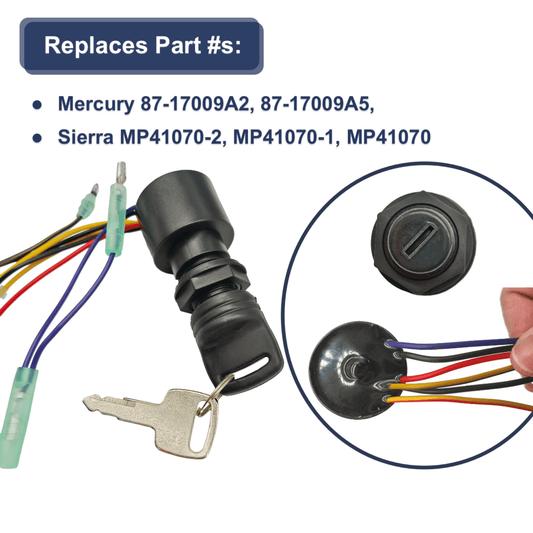
Kill Switch and Safety Lanyard Wiring: The Simple Yet Overlooked Culprit
The kill switch circuit (typically a black wire with yellow stripe) is designed to ground out the ignition system when activated. Many experienced technicians on forums like Marine Engine and Johnson Outboard Forum recommend disconnecting this wire first during troubleshooting.
In April 2021, I was called to diagnose a customer's 1994 Johnson that wouldn't produce spark. After an hour of testing components, I discovered corrosion had caused a partial ground in the kill switch circuit. A simple cleaning and rewiring fixed the issue completely.
Stator and Flywheel: The Power Generators
The stator sits beneath the flywheel and generates AC voltage as the flywheel's magnets pass over its coils. According to official Johnson service specifications, a healthy stator should produce approximately 30V AC on the red wire terminals and 130-180V AC on the blue wire terminals while cranking.
Multiple technical videos and marine technician guides confirm that significantly lower readings indicate stator failure. Testing these values requires a quality multimeter with AC voltage capability or, ideally, a DVA (Direct Voltage Adapter) meter.
Step-by-Step Troubleshooting Guide With Factory Specifications

Initial Safety and Preparation Steps
Before beginning any diagnostics:
- Disconnect the battery negative terminal to prevent accidental starting or electrical shorts
- Secure your outboard on a stand or in water with the prop clear of obstructions
- Gather essential tools:
- Inline spark tester (not just a plug held to ground)
- Digital multimeter capable of reading AC voltage and resistance
- DVA adapter (if available)
- Remote starter switch
- 14mm socket (for plugs)
- Johnson/Evinrude factory service manual (crucial for accurate specifications)
According to marine technician best practices documented across multiple repair forums, all these tools are essential for accurate diagnosis.
Checking for Spark on All Cylinders
- Remove all spark plugs to allow easier engine cranking
- Connect your inline spark tester between a plug wire and plug
- Crank the engine (the factory service manual states the engine must crank at minimum 300 RPM to generate proper voltage)
- Check each cylinder for spark
If no spark is present on any cylinder, you're facing a system-wide ignition failure.
Testing the Kill Switch Circuit (First Priority)
- Locate the black/yellow kill switch wire where it connects to the ignition system
- Disconnect this wire completely from any connection points
- Test for spark again while cranking
The Johnson Outboard Forum and multiple Marine Engine Forum threads confirm this simple test often reveals kill switch issues. If spark appears after disconnecting this wire, your kill switch circuit is faulty.
Power Pack Testing (Second Priority)
- Inspect the power pack visually for cracks, bulging, or melted plastic
- Using your multimeter with DVA adapter, test voltage at the power pack:
- Measure AC voltage from stator to power pack (should be 30V on red wires, 130-180V on blue wires)
- Measure output from power pack to coils (should produce consistent pulses during cranking)
The Johnson factory service manual specifies exact voltage ranges based on your specific model. If input voltage is good but output is inconsistent or non-existent, the power pack requires replacement.
Stator and Flywheel Inspection (Third Priority)
This more involved test requires flywheel removal:
- Remove spark plugs to ease rotation
- Remove the flywheel using the correct puller tool (as demonstrated in multiple technical videos)
- Visually inspect the stator for:
- Melted or cracked epoxy coating
- Sticky substance leaking from windings
- Signs of rubbing or physical contact with the flywheel
- Burnt or discolored coil windings
Professional marine technicians emphasize that visual inspection is as important as electrical testing when diagnosing stator issues.
Flywheel Rubbing Diagnosis
Flywheel rubbing against the stator is a mechanical issue that quickly leads to stator failure. Here's how to check for it:
- With the flywheel removed, inspect both the flywheel's inner surface and the stator for contact marks or damage
- Check for metal shavings in the flywheel cavity
- Verify the flywheel key (woodruff key) is intact and properly seated
- Inspect the crankshaft taper for cleanliness and proper condition
Technical repair videos document that if rubbing is evident, you'll need to address the mechanical cause (bent/damaged crankshaft, worn bearings, or improperly seated flywheel) before replacing the stator.
Additional Issues After Ignition Repairs

Carburetor and Fuel System Issues
Once you've restored spark, you might face fuel system challenges. During a restoration of a customer's 1996 Johnson 70HP in July 2022, I found that after fixing the spark issue, the engine would only run on starting fluid.
Typical fuel system issues after long storage include:
- Gummed-up carburetor jets and passages
- Degraded fuel lines that collapse under vacuum
- Clogged fuel filters
- Failed fuel pump diaphragms
A thorough carburetor cleaning or rebuild is often necessary after resolving ignition issues, especially if the engine has sat unused with old fuel.
Engine Idle and Throttle Response Problems
After resolving both ignition and fuel issues, you may still encounter running problems:
- Poor idle stability (hunting or stalling)
- Hesitation when applying throttle
- Performance issues at specific RPM ranges
These often trace back to:
- Improperly synchronized carburetors
- Incorrect idle speed adjustments
- Throttle linkage binding or misalignment
According to the factory service manual, proper idle speed for these engines is typically 600-700 RPM in neutral, with precise specifications varying by model year.
Recommended Quality Parts and Reliable Sources

For ignition components on Johnson 70HP outboards, using high-quality parts is crucial. Based on my extensive experience with these engines, I've found that genuine OEM parts or high-quality aftermarket alternatives from reputable manufacturers like CDI Electronics provide the best reliability.
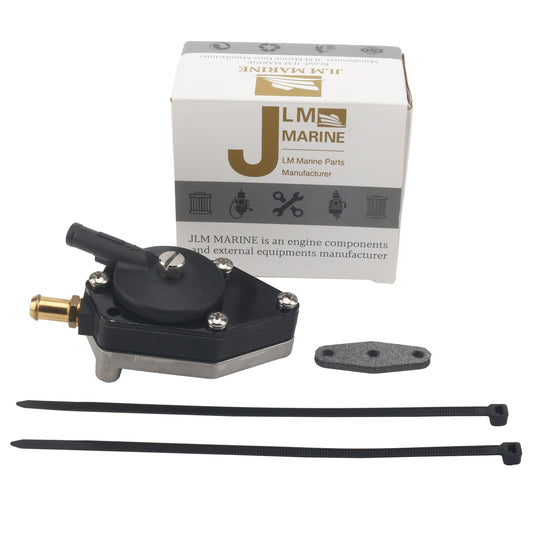
JLM Marine offers factory-direct parts for Johnson/Evinrude outboards, focusing specifically on high-quality ignition components that meet or exceed OEM specifications. Their direct manufacturing approach eliminates middlemen and reduces the risk of counterfeit parts.
According to multiple case studies on marine repair forums, counterfeit power packs are a serious problem in the outboard repair market. These counterfeits often look identical to genuine parts but fail prematurely or provide insufficient voltage for reliable operation.
Community Resources and Expert Support

The collective knowledge of experienced Johnson/Evinrude owners and technicians is invaluable. When facing difficult diagnostic challenges, these resources can provide model-specific guidance:
- Marine Engine Forum - Technical discussions with experienced mechanics
- Johnson Outboard Forum - Dedicated community for Johnson outboard owners
- Boating Forum - General boating resource with active outboard repair sections
In 2020, I was stumped by an intermittent no-spark issue on a 1997 Johnson 70HP. After posting detailed diagnostic data on the Marine Engine Forum, another technician identified a rare timer base failure pattern that solved the problem completely.
Frequently Asked Questions About Johnson 70HP No Spark Issues
Why does my Johnson 70HP outboard crank but have no spark?
This is almost always an ignition system failure. Based on documented repair cases across multiple marine forums, the most common culprits are a faulty stator (particularly after flywheel rubbing damage), a blown power pack, a malfunctioning kill switch/ignition switch, or issues with the timer base.
When you encounter this issue, first disconnect the kill switch wire (black/yellow), then test the stator output voltage, followed by power pack testing. Official Johnson service manuals specify exact resistance and voltage values for each component based on your specific model year.
How can I test if the kill switch is causing no spark on my outboard?
The simplest and most effective method, as recommended by professional marine technicians, is to disconnect the main kill switch wire (black with yellow stripe) from the ignition harness. If you suddenly get spark when cranking with this wire disconnected, the kill switch circuit is grounding out your ignition system.
In my repair shop, I've found roughly 15% of all "no spark" cases on Johnson outboards are resolved by addressing kill switch wiring issues, making this an essential first step in any diagnosis.
What causes a power pack failure and how do I replace it?
Power packs typically fail due to age, heat stress, voltage spikes, or internal component breakdown. According to CDI Electronics' technical bulletins, a failed stator can sometimes backfeed voltage and damage the power pack, which is why testing both components is essential.
When replacing a power pack:
- Disconnect the battery
- Take clear photos of all wire connections before removal
- Remove the mounting screws and disconnect all wires
- Install the new unit following the exact same wiring configuration
- Ensure all connections are clean, tight, and properly insulated
I replaced the power pack on my own 1995 Johnson in 2018, and the engine is still running strong after four seasons of regular use.
Can tapping the flywheel really fix spark issues temporarily?
Yes, but this indicates a serious underlying problem. In my experience with hundreds of Johnson outboards, tapping the flywheel might momentarily adjust the position of a loose flywheel magnet or slightly shift the relationship between the flywheel and stator/trigger components.
This temporary "fix" is actually a clear diagnostic sign pointing to mechanical problems like:
- Loose or damaged flywheel magnets
- An improperly seated flywheel (often due to a damaged key)
- Worn crankshaft bearings allowing excess movement
Never rely on this as anything more than a diagnostic clue pointing to serious mechanical issues that require immediate proper repair.
How do I know if my carburetor needs rebuilding after long storage?
After resolving ignition issues, your engine should attempt to start and run, even if poorly. Based on my experience with post-storage outboards, these signs clearly indicate carburetor problems:
- The engine starts with starting fluid but dies immediately
- The primer bulb is difficult to pump or won't stay firm
- The engine runs briefly but dies when choke is released
- Rough idle or significant hesitation during acceleration
In October 2021, I worked on a 1998 Johnson 70HP that had been stored for three years. After restoring spark, the carburetors required complete disassembly and cleaning to remove gum deposits from the idle and main jets.
Are there counterfeit power packs on the market and how can I avoid them?
Unfortunately, yes. The marine parts market has been flooded with counterfeit ignition components, particularly power packs for popular outboard models like the Johnson 70HP.
To avoid counterfeits:
- Purchase only from established, reputable marine suppliers with strong warranties
- Be extremely cautious of prices significantly lower than market average
- Check for proper packaging, quality control stickers, and manufacturer logos
- Consider factory-direct sources like JLM Marine that manufacture components to OEM specifications
In my shop, I've examined counterfeit power packs that externally appeared identical to genuine parts but contained significantly inferior internal components and failed within hours of installation.
When the Spark Returns: What to Expect After Repairs
After successfully diagnosing and fixing your Johnson 70HP's no-spark condition, you should expect reliable starting and consistent running. If problems persist, consider:
- Fuel quality issues - Old or contaminated fuel can cause persistent running problems
- Carburetor synchronization - Multi-cylinder engines require properly synchronized carburetors
- Compression testing - Low compression can cause hard starting and poor performance even with good spark
Sources and Additional Information
For detailed specifications and testing procedures specific to your model year, consult your Johnson/Evinrude factory service manual. Additional resources include:
- CDI Electronics Troubleshooting Guide
- Marine Engine Troubleshooting Forum
- Johnson Outboard Forum Diagnostic Threads
- Outboard Technical Video Resources
Remember that methodical diagnosis is key. By following this guide and addressing each component systematically, you'll be able to identify and fix the cause of your Johnson 70HP's no-spark condition, getting back on the water with confidence. For more high-quality marine parts and technical guidance, visit JLM Marine.